

 Quick ViewQuick View
 Quick View
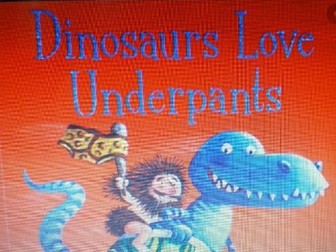
Dinosaurs love Underpants
A unit of work based on the book by Claire Freedman. Includes work on title, author, illustrator, blurb, similes, commas, apostrophes, long vowels and a sequencing task. Also includes a writing task. Slides can be edited and printed out to make worksheets.
IMPORTANT INFORMATION
Please DO NOT view the PowerPoint in PowerPoint viewer, view it as a SLIDESHOW, otherwise it will not be interactive.
 Quick View
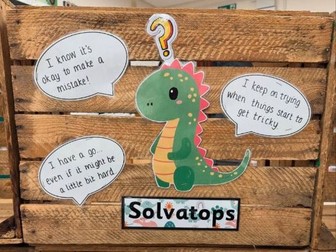
CoEL Dinosaur Display
All elements needed for your own ‘Characteristics of Effective Learning’ display with a cute dinosaur theme.
Dinosaur images
Dinosaur names
Speech bubbles with statements
 Quick View
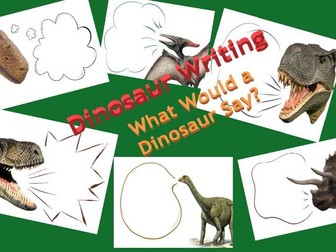
Dinosaur Writing - Speech Bubbles - What Would a Dinosaur Say?
Dinosaur Topic, Knowledge and Understanding of the World
EYFS or KS1
Dinosaur pictures with speech bubbles. Ideal for encouraging writing in Reception or Yr 1
 Quick View
Build a Dinosaur Fossil
contains 4 different dinosaur fossil templates
provide cut up straws or pasta to recreate the fossil
 Quick View
undefined
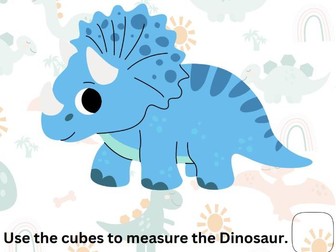
Dinosaur Timeline Activity
Differentiated resources to support the teaching of early chronological awareness. Children sequence the different dinosaur eras.
 Quick View
 Quick View
 Quick View
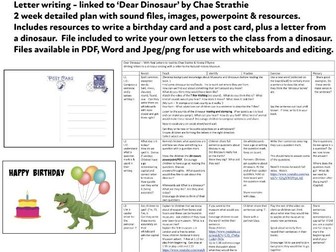
KS1 Dinosaur Literacy plan. Letter Writing 10 lessons. Dear Dinosaur book. English KS1 letter plan
**KS1 Dinosaur Literacy plan. Letter Writing using Dear Dinosaur - ends in writing a real letter to post. **
Key Stage 1 planning (can be adapted to suit KS2)
YouTube link to the book included.
Teach letter writing, punctuation, spelling, personal pronouns, capitals for proper nouns and sentence construction. Linked to Dear Dinosaur book (with real letters.) Wider world - about museums and dinosaurs.
Includes:
detailed letters
Lesson Plan
Powerpoint also available in PDF
PDFs for whiteboards of various resources
sound files of dinosaur roars
a letter from the dinosaur with a master to adapt
postcard to print and use with children
2 birthday cards to write in, relating the the book
plus other resources for ten lessons on writing letters
Lots of YouTube links are provided to enthuse and motivate further.
Suitable for KS1 particularly Year 1 children, although can be adapted for Y3.
An overview of the lessons:
Lesson 1 - About Dinosaurs and museums - hook and grab for book ( MP4 of moving T Rex and sounds provided)
Lesson 2 - Looking at dinosaurs and asking questions using a question mark.
** (PDF or Powerpoint of high quality T Rex photos and questions provided.)**
Lesson 3 - Using personal pronoun I. Use I’m, I’ll, I, I’ve.
Lesson 4 - Using capitals for personal pronouns.
Compose the first letter and read the book. (Link provided.)
Lesson 5 - Finding the letter from the dinosaur (resource provided plus blank
to adapt your own). Responding with questions.
Lesson 6 - Letter layout and replying to the dinosaur letter.
Lesson 7 - Spelling and handwriting work - write in a birthday card. (Provided.)
Lesson 8 - Use punctuation.?! when writing a** post card. (Provided.)**
Lesson 9 & 10 write a real letter to a museum with purpose and post.
I try to provide my resources so you can simply download, print and teach, as I know how busy all teachers are!
 Quick View
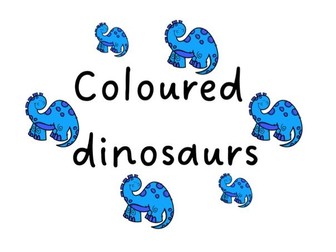
Coloured Dinosaur
Contains coloured dinosaur templates:
grey
orange
light blue
dark blue
red
purple
pink
yellow
green
provide pegs for children to add ‘spikes’
 Quick View
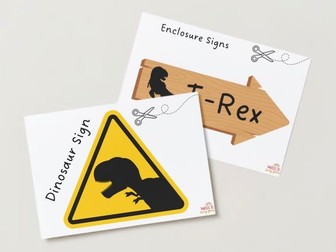
Dinosaur Role Play Pack
Dinosaur theme role play cut outs…
Signs
Enclousure Arrows
Leaves
Dinosaur eggs
Dinosaur footprints
Volcano
Bundle
 Quick View
The Little Green Dinosaur
2 weeks of resources and lesson slides following talk 4 writing for The Little Green Dinosaur in year 1.
Dear Dinosaur - Letter writing
A 2 week unit of work based on the story Dear Dinosaur. Includes all grammar work building up to children writing their own letter to the Dinosaur. Works for Year 1 and Year 2 and differentiated templates for each. Includes a flipchart and lesson templates.
 Quick View
Dinosaur Class Assembly
This was the script that my year 1 class used for our dinosaur class assembly.
 Quick View
 Quick View
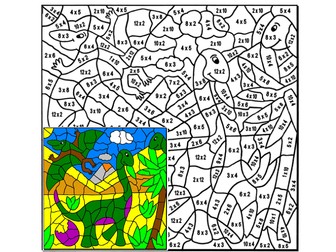
Dinosaur Times Tables Colouring Puzzle
Arithmetints colouring puzzles are an ideal way for students to develop and practise their mathematical skills. This unique dinosaur puzzle aims to embed children’s understanding of 2x, 3x, 4x, 5x and 10x tables facts. Arithmetints puzzles are a flexible resource which can be used for a variety of purposes including assessment. Each puzzle comes with an answer sheet for easy marking. These puzzles also really brighten up pupils’ workbooks or make a great display.
 Quick View
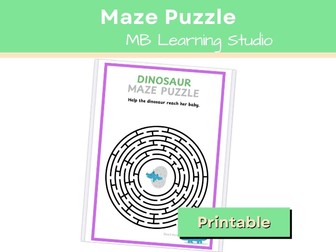
Dinosaur Maze
Make problem-solving fun with this dinosaur-themed maze puzzle! Children guide the dinosaur through the maze, developing fine motor control, concentration, and early logical thinking along the way.
Perfect for:
Morning work and early finishers
Dinosaur or prehistoric topic lessons
Calm activities and brain breaks
Home learning packs
This low-prep, printable activity supports:
Fine motor skills through careful pencil control
Spatial awareness and logical problem solving
Focus and perseverance with challenges
A simple yet engaging way to bring dinosaur-themed fun into your classroom while reinforcing key early learning skills.
 Quick View
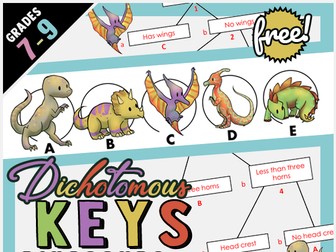
Dichotomous Keys Dinosaurs
Challenge your students to group and classify these dinosaurs by their common/uncommon characteristics with this FUN AND FREE Dichotomous Key Dinosaurs worksheet! Allow students to practice their skills in drawing visual (pictorial) and writing text-based dichotomous keys by discerning between 5 dino-organisms. Perfect for consolidation, quick-finishers, extra credit assessment, sub plans or just for fun! Enjoy and don’t forget to leave feedback!
✂ Contents
Teacher notes: Ideas and tips for teaching dichotomous keys and a brief explanation on how students can achieve success with the included practice problems.
Labelled Dinosaur Diagrams (Characteristics): Perfect for a quick refresher of dinosaur parts and to address key dinosaur vocabulary.
Dinosaur Dichotomous Key Problem: The worksheet tasks students to classify the 5 organisms by their characteristics first via a table of similarities and differences. This then scaffolds them to create text and visual dichotomous keys. I’ve provided you with two versions of the problem (characteristics given or no characteristics) for easy differentiation.
Answer Keys: Provided for your convenience!
Blank Master: For your own personal use in creating more practice problems, or for students to create their own, or even as an assessment piece.
✂ Teaching Suggestions & Ideas
Students should have prior knowledge of reading and drawing dichotomous text and visual keys prior to attempting this task. Print the single-sided problem individually, or print two copies back to back for the extra challenge (make TWO DIFFERENT keys of these 5 organisms!). Great for revision, homework, content work (handed straight to students after introducing the topic) or even assessment!
Dinosaurs and Birds - Dinosaur timeline
Objective: Make an arm-span timeline to help visualise time.
Learning outcomes
Children will:
learn a strategy for thinking about very long periods of time that can be applied to other aspects of history
understand that non-avian dinosaurs lived long before humans – they did not live together
understand that Earth is more ancient than dinosaurs
understand that humans have lived for a very short time compared to the age of the planet
From early 2018 to late 2020 the Natural History Museum’s iconic Diplodocus cast, Dippy, is on a Natural History Adventure across the UK. Dippy on Tour: A Natural History Adventure is an exploration of the UK’s natural history past, present and future. Dippy is a catalyst for exploring different aspects of the natural world along the eight-stop tour to museums and cultural hubs.
The Natural History Museum exists to inspire a love of the natural world and unlock answers to the big issues facing humanity and the planet. More than five million people visit the sites in South Kensington and Tring every year, and the website receives over 500,000 unique visitors a month. It is a world-leading science research centre, and through its unique collection and unrivalled expertise it is tackling issues such as food security, eradicating diseases and managing resource scarcity.
Dippy on Tour is brought to you by the Natural History Museum in partnership with the Garfield Weston Foundation, and supported by DELL EMC and Williams and Hill.