Internal EnergyQuick View
BrainJar

Internal Energy

(0)
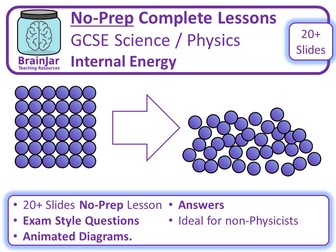
Complete No-Prep lesson with exam questions, tasks and answers on Internal Energy for AQA GCSE (9-1) Science / Physics. This lesson covers all of AQA GCSE Physics 4.3.2.1 / Combined Science 6.3.2.1 As a Secondary Science teacher and Deputy Headteacher for many years I make high quality no-prep lessons so busy teachers can teach outstanding lessons without spending hours planning. This high quality lesson includes explanations, different types of in-lesson assessment (all with answers) and unique exam questions. My lessons are ideal for non-Physicists - as a Biologist who retrained as a Physics teacher I know how to take learners on a journey that builds up their understanding step by step, while still going into a lot of depth. The preview video shows a representative sample of slides from the resource so that you get a good idea of what it includes before you buy. What’s Included: • Starter / Do Now Activity • Explanation slides in “chunked” sections with animated diagrams. • Multiple questions in different question styles and difficulties - no need for worksheets. Each “chunked” explanation section typically includes a set of “learning check / quick questions” followed by a set of in-depth questions on the learning from that “chunk” of the lesson. All questions have answers. • Exam-style questions on the whole lesson at the end of the lesson- these are unique, based on real exam questions but not just copied from exam boards. • Answers for all questions • All easily editable to adapt to your teaching or to use in existing lessons. • Slightly humorous, at points, if you like that sort of thing. Learning objectives: Define Internal Energy. Explain why heating a substance increases its internal energy. Explain why heating a substance until it changes state increases its internal energy. Written for AQA GCSE Science and Physics but likely to be applicable to other exam specifications. Please leave a rating / review and all other feedback gratefully received!

Assembly: The International Day of HappinessQuick View
wilfy

Assembly: The International Day of Happiness

(0)
An assembly for The International Day of Happiness. Since 2013, the United Nations has celebrated the International Day of Happiness as a way to recognise the importance of happiness in the lives of people around the world. The United Nations invites each person of any age, plus every classroom, business and government to join in celebration of the International Day of Happiness. This highly dynamic 17-slide Powerpoint presentation creatively presents information on this event and can be showcased to any age group, but it probably most appropriate for secondary level. It includes images, dynamic transitions, informative text, video and links for extension work in form time – including extra video and classroom activities. Slides 1: What is The International Day of Happiness? Slides 2-3: Why is being happy important? Slides 4: Happiness and Young People: A global issue? Slides 5-9: What causes young people to be unhappy? Slides 10-13: Top 10 tips for being happy. Slide 14-17: Form time extension activities. As reviewers have stated for previous resources shared on TES: “I sat down to plan my assembly for next week and found this resource, and it’s perfect. The best £2 spent. Thank you. I can teach this straight from the slides.” “Just buy it!” “Your resources have been life savers!” “Well worth the money and really saved my life” “I just wanted to say that as a non-specialist these resources are worth every single penny! Thank you so much for making and sharing them.” “Blown away by this! Can’t thank you enough!” “They have saved me a huge amount of time and the detail that goes into your work is second to none. You put others to shame who charge twice as much for very little. Can’t thank you enough.” “Your new spec resources are saving me hours & hours of work! Thanks, they are really good.” “These resources are so useful - I cannot tell you how much time they have save me - very clear to follow and easy to adapt for revision material — well worth the money”
IGCSE Business Edexcel Theme 1 - Business activity and influences on businessQuick View
ajulesa

IGCSE Business Edexcel Theme 1 - Business activity and influences on business

12 Resources
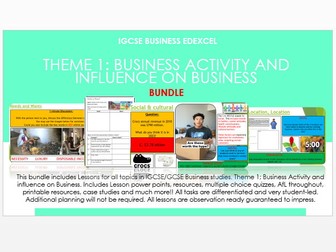
This bundle includes Lessons for all topics in IGCSE/GCSE Business studies. Theme 1; Business activity and influences on business. Includes Lesson power points, resources, multiple choice quizzes, AfL throughout, printable resources, case studies and much more!! All tasks are differentiated and very student-led. Additional planning will not be required. 1.1 Business objectives 1.2 Types of organisations 1.3 Classification of businesses 1.4 Decisions on location 1.5 Business and the international economy 1.6 Government objectives and policies 1.7 External factors 1.8 What makes a business successful? End of Topic examination questions for Theme 1 can be found here: https://www.tes.com/teaching-resource/resource-12971664 They are FREE! :D
EDEXCEL PEARSON BTEC Business Level 3 - Unit 5 - International Business - COMPLETE UNITQuick View
mark_barrett22

EDEXCEL PEARSON BTEC Business Level 3 - Unit 5 - International Business - COMPLETE UNIT

5 Resources
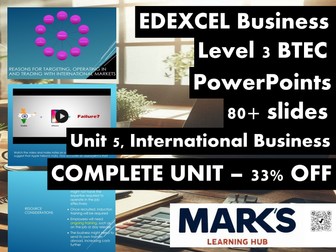
BTEC Business Unit 5 (International Business) - 5 Powerpoints, representing the WHOLE UNIT Every Learning Aim comprehensively covered and all materials written by an experienced teacher and BTEC Moderator. PowerPoints contain all the materials that your students will need and include activities, questions and videos to review and reinforce knowledge. One third discount on cost of buying individual PowerPoints. Want individual Learning Aims or elements within them? Search for the individual Elements that you require.
Unit 5: International Business student checklist and feedback templates for ALL assignments!Quick View
mikepaulus1991

Unit 5: International Business student checklist and feedback templates for ALL assignments!

(0)
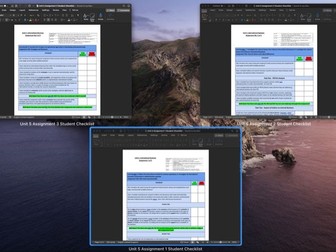
This resource comprises resource for all THREE assignments of Unit 5: International Business of the Level 3 BTEC National Extended Diploma in Business, this resources comprises three documents: Assignment 1 (for LA & LB) checklist to help learners complete the assignment Assignment 2 (for LC&LD) checklist to help learners complete the assignment Assignment 3 (for LE) checklist to help learners complete the assignment Feedback document to post to learners with written feedback against the criteria on a seperate doc to their coursework (two sets of feedback per assignment included on one doc) Each checklist tells students when specific criteria has been achieved (often a challenge for teachers!) This resource has made this unit such a breeze for teachers like myself, allowing students to start right away and complete the assignments independantly to a high standard (you can post this resource directly to students!). All resources are hugely detailed and enable all LPA students to achieve a distinction for this unit. Enjoy! *I am an experienced lead teacher of Business and Economics, as well as SV for BTEC Level 2 Tech Award in Enterprise and Associate Examiner for Level 3 BTEC externally assessed units
Edexcel Business - Ratio AnalysisQuick View
TeachingBusiness

Edexcel Business - Ratio Analysis

(0)
A new series of resources aimed at assisting teachers with the delivery of the Edexcel A Level Business specification. This resource specifically looks at topic 3.5.2. Ratio Analysis. This PowerPoint presentation looks at two of the main financial ratios used in accounting, namely ROCE and Gearing. The slides assess the benefits and drawbacks of these ratios and interpret how they can be used to make business decisions. It concludes with an examination of the limitations of ratio analysis. The lesson includes new and modified practice questions with suggested answers. The slides contain several activities with suggested answers including the Quick Fire Five and a 10 mark practice question. The clear and well-presented nature of the slides are aimed at helping students to understand the topics with each topic analysed to provide a balanced assessment of the theory.
Eduqas A Level Business - ProductivityQuick View
TeachingBusiness

Eduqas A Level Business - Productivity

(0)
These slides and hand out are designed to support the delivery of the Component One topic of productivity. They explain what is meant by productivity and show ways of measuring it before examining how productivity can be increased. The slides then proceed to explain the concept of capacity utilisation and its calculation and interpretation. They examine the problems of under-utilisation and the issues of operating at maximum capacity for prolonged periods of time. The slides contain the Quick Fire Five questions, practice calculation questions and also a practice essay (all with solutions).
International AS Business Oxford AQAQuick View
douglaw99

International AS Business Oxford AQA

(0)
All PPT slides and worksheets for Unit 1: Business and markets AND Unit 2: Managing operations, Human resources and Finance With past paper exam questions integrated
Unit 5 - International BusinessQuick View
Adamn93

Unit 5 - International Business

(0)
A fully comprehensive unit for unit 5 international business. All lessons complete to meet all learning aims and requirements for assignments. Additional distinction focus lessons to push students for high marks.
Globalization and International Business (IB)Quick View
galkin_pavel07

Globalization and International Business (IB)

(0)
Globalisation and International Business is a lecture which is covered during International Business Module for bachelor/master level students. LECTURE OVERVIEW Globalization has become a major socioeconomic force and topic of debate in the twenty-first century. Chapter One examines the forces that are driving this phenomenon, as well as the often-passionate criticisms of the process. It reviews the objectives that firms pursue when they engage in international business activities and describes the various modes of entry that may be used. It also notes the terminology that has come into existence as new types of organizations have evolved. The chapter concludes with a discussion of the ways in which international business differs from domestic business. Lecture Learning Objectives: • Define globalization and international business and show how they affect each other • Grasp why companies engage in international business and why international business growth has accelerated • Discuss globalization’s future and the major criticisms of it • Illustrate the different ways in which a company can accomplish its global objectives • Recognize the need to apply social science disciplines to understanding the differences between international and domestic business In this file you will find: 1 Globalization and International Business Lecture Power Point Presentation 1 Guide file how to conduct Lecture 1 Test Bank with 100 different questions and full answer to them with the descriptions and explanations 3 Interesting Exercises 8 Interesting Discussion Questions and answers to them 1 additional reading file about the lecture topic in order to enhance Lecturer/Teacher/Student knowledge 1 folder with useful pictures Once you will purchase this resource please leave a comment!
Introduction to International Business - Lesson 1 Introduction to International BusinessQuick View
tourismcourses

Introduction to International Business - Lesson 1 Introduction to International Business

(0)
Course Description This 16-lesson course, Introduction to International Business, provides students with a comprehensive understanding of how firms operate, compete, and collaborate in the global business environment. It explores the strategic, cultural, institutional, and ethical dimensions that shape international management decisions in an increasingly complex world. Students will learn how multinational enterprises (MNEs), small and medium-sized firms, and emerging-market challengers expand across borders through foreign direct investment (FDI), alliances, and innovation networks. The course examines how cultural differences influence marketing, human resource management, and leadership, and how global organisations balance profitability with corporate responsibility, sustainability, and ethical governance. The course aims to: Develop an in-depth understanding of the strategic, organisational, and institutional factors influencing international business operations. Equip students with analytical tools to assess market entry options, cross-border partnerships, and global value chains. Foster awareness of cultural diversity and its implications for communication, leadership, and marketing. Encourage responsible and ethical thinking aligned with global sustainability goals (ESG, SDGs). Strengthen critical, reflective, and practical skills essential for future global managers and entrepreneurs. The course has 16 lessons divided into FOUR blocks, including Block 1: Global Strategy & Structure – Internationalisation theories, FDI, global R&D, alliances, and competitive strategy. Block 2: Cultural, Marketing & HR Dimensions – Cross-cultural management, international marketing, product innovation, and global talent development. Block 3: Global Trade, Finance & Supply Chain – Institutions, trade agreements, logistics, and sustainable supply chains. Block 4: Ethics, Governance & Sustainability – CSR, ESG frameworks, and the future of responsible globalisation. Assessment includes: • Mid-Term Group Project (40%) – Market entry and strategy presentation. • Final Exam (60%) – Integrative analysis of strategy, culture, trade, and ethics. The materials included are extremely rich and integrated, including complete PowerPoints, detailed lesson plans, previews and reviews, weekly tests, reading materials, case studies, and video links, exercises, and group activities. And there are two major assessments (mid-term group project and final exam). Target Audience This course is designed for a wide range of learners — from secondary and post-secondary students to higher education and professional training. Its flexible structure and resource-rich content make it equally valuable for teachers seeking ready-to-use materials, institutions developing IB curricula, and individuals interested in global business literacy.
Introduction to International Business - Lesson 11 Import and Export in International BusinessQuick View
tourismcourses

Introduction to International Business - Lesson 11 Import and Export in International Business

(0)
Course Description This 16-lesson course, Introduction to International Business, provides students with a comprehensive understanding of how firms operate, compete, and collaborate in the global business environment. It explores the strategic, cultural, institutional, and ethical dimensions that shape international management decisions in an increasingly complex world. Students will learn how multinational enterprises (MNEs), small and medium-sized firms, and emerging-market challengers expand across borders through foreign direct investment (FDI), alliances, and innovation networks. The course examines how cultural differences influence marketing, human resource management, and leadership, and how global organisations balance profitability with corporate responsibility, sustainability, and ethical governance. The course aims to: Develop an in-depth understanding of the strategic, organisational, and institutional factors influencing international business operations. Equip students with analytical tools to assess market entry options, cross-border partnerships, and global value chains. Foster awareness of cultural diversity and its implications for communication, leadership, and marketing. Encourage responsible and ethical thinking aligned with global sustainability goals (ESG, SDGs). Strengthen critical, reflective, and practical skills essential for future global managers and entrepreneurs. The course has 16 lessons divided into FOUR blocks, including Block 1: Global Strategy & Structure – Internationalisation theories, FDI, global R&D, alliances, and competitive strategy. Block 2: Cultural, Marketing & HR Dimensions – Cross-cultural management, international marketing, product innovation, and global talent development. Block 3: Global Trade, Finance & Supply Chain – Institutions, trade agreements, logistics, and sustainable supply chains. Block 4: Ethics, Governance & Sustainability – CSR, ESG frameworks, and the future of responsible globalisation. Assessment includes: • Mid-Term Group Project (40%) – Market entry and strategy presentation. • Final Exam (60%) – Integrative analysis of strategy, culture, trade, and ethics. The materials included are extremely rich and integrated, including complete PowerPoints, detailed lesson plans, previews and reviews, weekly tests, reading materials, case studies, and video links, exercises, and group activities. And there are two major assessments (mid-term group project and final exam). Target Audience This course is designed for a wide range of learners — from secondary and post-secondary students to higher education and professional training. Its flexible structure and resource-rich content make it equally valuable for teachers seeking ready-to-use materials, institutions developing IB curricula, and individuals interested in global business literacy.
International business bundleQuick View
MIssDZA

International business bundle

(0)
Btec level 3 unit 5 ; International business - This contains power point lessons and worksheets for the first part of this module Woudl also be useful for any students looking at international business NB this was written while the debate over Brexit was still happening and before covid- so you may need to adapt the ‘Brexit debate part’ 6 full power point lessons power point on currency intro to aim C worksheets and handouts
Eduqas A Level Business - Lean ProductionQuick View
TeachingBusiness

Eduqas A Level Business - Lean Production

(0)
Refreshed and updated PowerPoint resources aimed at assisting teachers with the delivery of the WJEC/Eduqas A-level Business specification. These slides are designed to support the delivery of the Component One topic of lean production. They explain what is meant by lean production before explaining the range of techniques that are used to reduce waste and improve productivity including Kaizen, just-in-time, cell production and time based management. It finishes with an evaluation of lean production and its importance and impact on a business and their stakeholders. The slides contain the Quick Fire Five questions and also a practice essay (both with solutions).
Business Structure CIE Cambridge InternationalQuick View
UpsideLearning

Business Structure CIE Cambridge International

(1)
1.2 Business Structure - (7 Full Lessons) Leave a review for a FREE single resource This SoW has been meticulously crafted, offering a differentiated and engaging approach that enables efficient progression through content. Built to the highest standards and grounded in current research, the unit incorporates dual coding and retrieval practices at its core. A consistent colour scheme is also utilised to enhance both your delivery and students’ comprehension. 1.2 Business Structure - (7 Full Lessons) 0. Economic Sectors Legal Structure in the Private Sector Sole Traders and Partnerships Ltd’s and PLC’s Franchises Cooperatives Joint Ventures Social Enterprises By leaving a review of any of our resources, you can claim a FREE single resource from our ever-expanding library. Just send a message to the email above, which is checked daily. upsidelearning1@gmail.com Best FREE Resources (Upside Learning) FREE - Computer Safety - https://www.tes.com/teaching-resource/-13121810 FREE - Coraline Neil Gaiman (Lesson 1) - https://www.tes.com/teaching-resource/resource-13108829 FREE - Gothic Literature (Lesson 1) - https://www.tes.com/teaching-resource/-13109342 FREE - Physics IGCSE (Lesson 1) - https://www.tes.com/teaching-resource/-13118154
Edexcel Business - International Trade and Business GrowthQuick View
TeachingBusiness

Edexcel Business - International Trade and Business Growth

(0)
A new series of resources aimed at assisting teachers with the delivery of the Edexcel A Level Business specification. This resource specifically looks at topic 4.1.2 International Trade and Business Growth. It considers the issues of imports and exports; specialisation and competitiveness and the key issue of Foreign Direct Investment (FDI). The slides contain several activities with suggested answers including the Quick Fire Five and a 10 mark practice question. The clear and well-presented nature of the slides are aimed at helping students to understand the topics with each topic analysed to provide a balanced assessment of the theory.