This lesson investigates how to make our seas more sustainable, one worksheet is questions that accompanies Blue Plant 2 episode 7 “Our Blue Planet”, another worksheet provides solutions and students have to explain explain hwo that particular solution would make teh seas sustainable and then can add their own solutions to problems.
The pack includes:
Display banner- a long colourful banner for your display
Display border- two colourful themed borders to print out as many times as you need for a display board of any size
Word and picture flashcards- colourful cards to add to a display or writing area
Fish colours- coloured fish each with the colour name on
Ocean posters- a set of colourful posters showing the different sea creatures in the book
Title poster- an A4 poster with title, author and illustrators name complete with colourful illustrations
Photos- colour photos to print out of the different creatures in the book
Name labels- labels of the different creatures- great to use on displays
Colour fish- large A4 size fish in different colours with colour labels to add
Fact cards- simple fact cards about each creature
Large display pictures- large coloured pictures of each creature plus extra pictures of seaweed, rocks, shells etc to create a great ocean display
A4 word card- an A4 word card with words and pictures for the children to use when writing about the story
Ocean animal alphabet- a lovely alphabet line on colourful creatures
Writing worksheets- write below the pictures on each sheet
Writing sheets
Speech bubble worksheets
Word searches
Worksheets- a collection of worksheets about the book and the creatures
Animal worksheets- fun worksheets to fill in different details about each animal in the book- these look great on display
‘My underwater adventure’- write a story about the creatures you meet
Acrostic poems
Odd and even number line
Ocean animal number line
Number rhymes
Size ordering worksheets
Counting worksheets
Counting cards- cards from 1-10 with the corresponding number of creatures on each page
Individual number line- number lines from 1-10 and 1-20 with pictures of fish and octopus
Matching pairs
Build a fish- roll a die and collect a part of your fish- how many fish can you make?
Dominoes
Colour bingo
Roll and colour- roll the die and colour the matching sea creature on your sheet
Picture bingo
Tracing sheets- trace the patterns on the fish and trace over the dotted lines on the animals
Stick puppets
Face masks
Play dough mats- a collection of under sea themed mats to use in your play dough area
Colouring worksheets
Fish crafts
Octopus craft
Jellyfish craft- follow the instructions to make your own hanging jellyfish
Jigsaws- colour the picture and then cut along the dotty lines and reassemble to make your sea creature
Templates
PowerPoint- a PowerPoint with simple facts about some of the animals in the book
Please note: The art work used in these resources has been produced by ourselves. It is not associated with, or endorsed by the authors or publishers
Please note that the one spelling mistake pointed out has been amended
Get** this lesson as part of a full 11 lesson Scheme of work **on World Biomes for just £3.89! Includes deserts, rainforests, coral reefs, polar biomes & more!
https://www.tes.com/teaching-resource/ks3-geography-biomes-climates-and-ecosystems-sow-11-lessons-deserts-rainforests-artic-and-more-12840224
Or get 7 x KS3 Geography Schemes of work for just £13.99 here! 75+ lessons!
https://www.tes.com/teaching-resource/all-of-my-ks3-resources-12842783
The lesson:
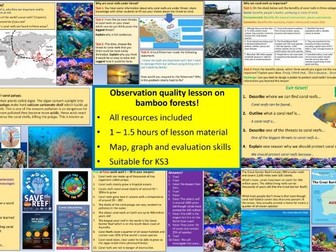
An awesome fully resourced KS3 Geography lesson on Coral Reefs with different activities, differentiation and lots of geography skills and learner habits! The geography lesson and resources have been successfully tried and tested in multiple observations and it has ideal learning challenges for any KS3 class or even high ability year 6 classes.
Lesson breakdown
What coral reefs are
The conditions coral needs to form and survive
Where coral reefs can be found
To investigate and understand the risks to coral reefs
To identify and categorise the different benefits of coral reefs
Threats to coral reef peer share and benefits of reefs sheets are included. All answers on PPT!
Please check out all of my FREE Geography lessons on my shop where you´ll also find full schemes of work for just £3 and lots of other useful resources!
I would really appreciate it if you could leave me a review, thanks!
https://www.tes.com/teaching-resources/shop/ukjoshkelly94
Looking for lots of fabulous resources and photos about the oceans and seas around the world? I have them here! In addition, I have included some English story writing prompts about this topic.
A 52-slide PowerPoint that covers:
Atlas work to identify the world’s oceans and seas.
Litter washed up on our shores.
Time taken for litter to biodegrade.
Water pollution.
Litter and impact to wildlife and people.
Litter survey.
Persuasive writing.
Fishing, and the ecosystem.
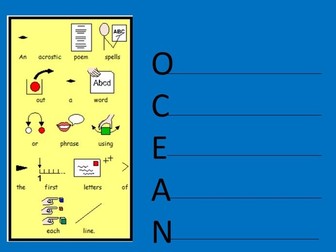
A Power Point exploring different types of poetry based on the sea/ oceans. The Power Point covers rhyming words, acrostic, shape and listing poems - also includes widgit symbols.
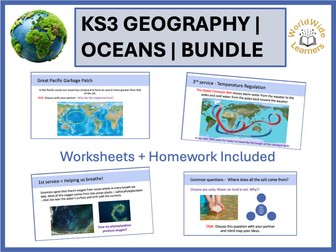
This fully resourced KS3 Geography unit explores the world’s oceans through both physical and human geography, helping students understand why oceans matter and how human activity is shaping their future.
Across seven lessons, students investigate the location and characteristics of the world’s oceans, explore different marine environments, examine the goods and services oceans provide, and evaluate major global challenges such as climate change, plastic pollution, and overfishing. The unit finishes by considering how oceans can be protected and managed sustainably.
The bundle includes:
• Clear, curriculum-aligned learning objectives
• Engaging starters and enquiry-based questions
• Structured discussion and extended writing tasks
• Case studies including coral reefs, Arctic shipping routes, and marine protected areas
• Built-in challenge questions for stretch and differentiation
Lessons included:
1. Where and What Are the World’s Oceans?
2. Ocean Ecosystems: Coral Reefs, Deep Sea and Trenches
3. The Value of the Oceans: Physical Services
4. The Value of the Oceans: Food Supply and Shipping
5. Climate Change and the Oceans
6. Plastic Pollution in the Oceans
7. Protecting the World’s Oceans
Suitable for KS3 (Years 7–9) and designed to work with any UK exam board.
All resources are provided as fully editable PowerPoint lessons, making this bundle ideal for a half-term scheme of work or as a flexible pick-and-mix resource.
-THIS LISTING IS AN INSTANT DIGITAL DOWNLOAD – PLEASE NOTE : NO PHYSICAL ITEMS WILL BE SHIPPED!
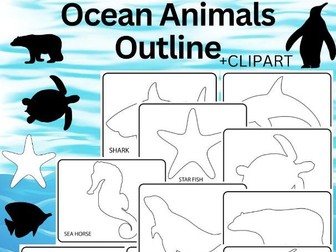
-Use our Ocean Animals Outline Templates to extend a life science lesson on animals or as an art activity!
This resource has ten printable ocean animal outlines, with templates for the following creatures:
Shark
Dolphin
Polar bear
Penguin
Orca
Star Fish
Turtle
Seal
Fish
Sea Horse
You can use these ocean animal templates as a life science extension activity when studying aquatic animals. The coloring pages can help your children learn to recognize and identify different sea animals. Children can then add the unique features of the animals to the templates. Once the masterpieces are finished, you can view them to check your students’ comprehension of animals characteristics.
Alternatively, why not use these animal coloring pages alongside your lessons to encourage your students to walk on the wild side and explore their creativity?
The Animal Outline Templates are also a helpful way for you to encourage your students to work on different drawing techniques and build fine motor skills.
The completed pictures can then be proudly displayed around the classroom, placed in a science lab journal, or added to an art portfolio.
Files Details :
-10 Image 300 HQ SIZED 8.5X11 INCHES,for easy integration into your projects.
-1 PDF HQ 10 Pages.
-10 PNG TEMPLATE.
-10 PNG SILHOUETTE.
-with thick black lines for easy resizing and crisp, clear prints at any size.
USE THESE FOR:
-Outlines Worksheets.
-Animals Worksheet
-Fast Finishers.
-Morning Work.
-Kangaroo Coloring Pages.
-Cute Animals Coloring Book.
-Homework.
-Fish Coloring Pages.
-Distance Learning.
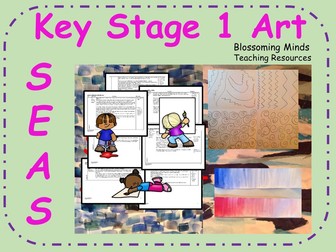
This resource is a set of 5 Art lessons based around the theme of the sea, oceans and water for KS1. The key skills that are taught include creating different tones and shades with paint and pencil, using shapes, patterns and lines and experimenting with different materials.
There are 3 different artists used as inspiration, all of whom have painted the sea or water using very different techniques. The children have the opportunity to work alone for 4 lessons and part of a collaborative group project for the final lesson. They have lots of opportunity to choose what materials they work with.
The 15 page pdf lesson plans are very detailed and include a list of any resources you will need to get out of the cupboard. There are also details of curriculum links and examples of work from my classes. I have included the simple 7 slide PowerPoint I used for the series of lessons, which contains examples of the artists’ work around which the lessons are based.
I hope you enjoy the lessons! They are great fun!
World Oceans Day Assembly/tutor time: Dive Deep into Our Blue Planet (KS3 & KS4)
Inspire your students to become ocean champions with this engaging and informative World Oceans Day assembly!
Designed specifically for Key Stage 3 and 4, this comprehensive resource provides everything you need to deliver a powerful and thought-provoking assembly that highlights the importance of our oceans, the threats they face, and what we can all do to protect them.
What’s included in this ready-to-deliver package:
Fully Editable PowerPoint Presentation:
Visually stunning slides packed with high-quality images and clear, concise information.
Engaging content tailored to resonate with KS3 and KS4 students, covering:
The wonder of the oceans: Their vastness, biodiversity, and crucial role in supporting life on Earth.
Ocean ecosystems: Exploring fascinating habitats from coral reefs to the deep sea.
The challenges facing our oceans: Plastic pollution, climate change (ocean acidification and warming), overfishing, and habitat destruction.
The impact on humans: How ocean health affects our climate, food security, and economy.
Solutions and actions: What individuals, communities, and governments can do to make a difference.
Inspiring stories of conservation efforts and young ocean advocates.
Detailed Assembly Script/Notes:
Ready-to-read script that can be delivered by a teacher or students.
Comprehensive speaker notes for each slide, providing additional context, discussion points, and suggested activities.
Clear timings to help you manage the assembly effectively.
Follow-up Activity Ideas (Optional):
Suggestions for classroom discussions, research tasks, or creative projects to extend learning.
Links to reputable external resources for further exploration.
Learning Objectives:
Clearly stated objectives for student understanding and engagement.
Why choose this World Oceans Day Assembly resource?
Saves you valuable planning time: A complete, ready-to-use package.
Curriculum Aligned: Addresses themes relevant to Science, Geography, PSHE, and Global Citizenship.
Engaging & Educational: Captivates students’ attention while delivering vital knowledge.
Promotes Critical Thinking: Encourages students to analyse complex environmental issues.
Empowers Action: Inspires students to consider their own role in protecting the environment.
Fully Editable: Adapt the content to suit your school’s specific needs and focus.
Help your students understand the critical importance of our oceans and inspire them to become the next generation of ocean stewards. Purchase this World Oceans Day Assembly resource today and make a real splash!
Perfect for:
World Oceans Day (June 8th) assemblies
Environmental awareness weeks
PSHE lessons
Science and Geography curriculum support
This clear, detailed and visually-appealing resource offers a complete reference point for students revising knowledge relating to the five oceans and seven seas, as a part of their study of locational knowledge in geography. It contains comprehensive sections on:
Overview and world map;
The Five Oceans Facts;
The Five Oceans by Size;
Deepest Points in the Oceans;
Interesting Ocean Features;
Seas.
The resource is designed to be printed onto A3, and is provided as both a PDF and a Word version (so that you can edit if you want to). All images used are licensed for commercial use and are cited on a separate document (included). The resource is most suitable for students in KS1 or lower KS2.
Following their personal choices in session 1, children research the countries they identified. They mark physical features on their maps, including rivers, lakes, deserts and mountains. They also identify the oceans and seas.
Suitable for years 5 and 6.
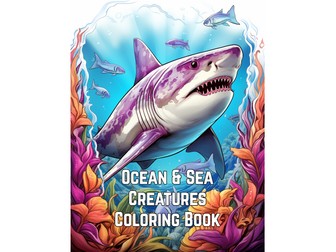
Dive into a world of vibrant imagination with our Ocean and Sea Creature Coloring Book! Embark on an enchanting journey beneath the waves as you bring to life a mesmerizing collection of intricate illustrations featuring magnificent marine life. From graceful dolphins and majestic whales to dazzling coral reefs and captivating seahorses, this coloring book offers a captivating escape for both children and adults alike. Unleash your creativity and explore the wonders of the deep blue sea with this captivating coloring adventure that combines relaxation, education, and artistic expression. Dive in and let your imagination run wild with our Ocean and Sea Creature Coloring Book!
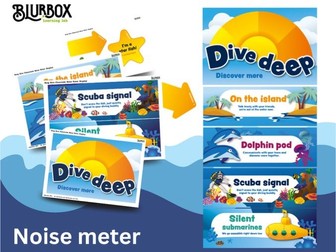
Deep Dive classroom noise meter display - Noise Monitor display
This underwater ocean and sea life visual gives you:
1 PDF with 4 pages for printing and quick cutting for display.
1 x A4 - Title Card
2 x A4 - noise meter sections
1 x A4 - arrows to help students see what level of noise they is appropriate. This sheet also has an award starfish for those who are working well.
Deep dive, discover more, manage your classroom.
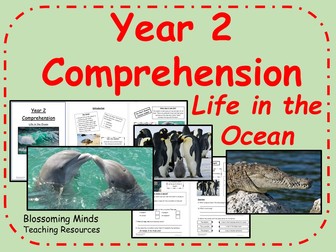
This resource is a non-fiction comprehension activity for year 2. It is based on the KS1 SATs reading paper and includes 3 differentiated levels. There are a range of ‘what,’ ‘which,’ ‘how’ and ‘why’ questions, some multiple choice tick questions and some that require more detailed answers. The activity is also laid out in a similar way to the SATs booklets, with four pages of pictures and short written extracts to read and 2-3 questions per page.
This comprehension is all about the ocean and covers three animals that live in or on the sea. It would be perfect for a habitats topic.
PDF file format and editable Microsoft word format included in the price.
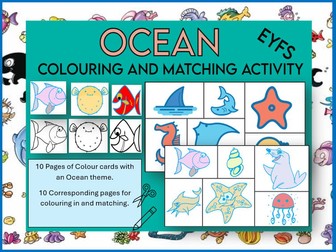
10 colouring pages showing items and animals related to the Ocean / Sea / Seaside. Children can colour in the pictures - 6 to a page. They can then cut these out and match them to the 10 corresponding colour pages.
Children can also cut around the outlines of the animals and objects and make them into a collage scene or stick in books for topic work.
Suitable for EYFS and KS1 children.
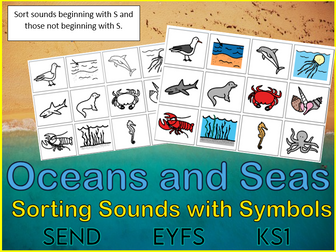
A resource linked to Oceans and Seas / Water and National Dolphin Day on April 14th. Linked also to reading and phonics.
There are 3 differentiated worksheets.
Sheet 1
Children sort out colour pictures with words into those beginning with S and those not beginning with S.
Sheet 2
Children sort the colour pictures without the words.
Sheet 3
Children colour the pictures and sort into sets.
Boardmaker licenced
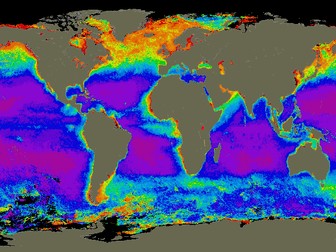
What makes one sea warm and another sea cold? What makes water flow from one part of the world to another? And how does this affect where we find life in the oceans of the world?
In this activity you and your students will:
Carry out some simple experiments that explain the basics of ocean currents.
Carry out some experiments that show the conditions plant life needs to thrive and how this relates to water temperature.
Learn about the impact this has on the diversity and location of marine life.
Create maps showing the major ocean currents and life ‘hotspots’.
Image from NASA’s SeaWiFS mission (pubic domain)


 Quick View