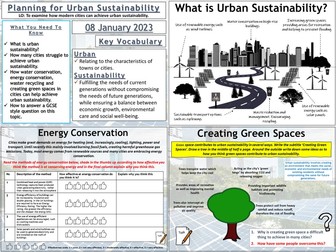
AQA GCSE Geography lesson for the new specification Unit 2A: In this lesson we look at the what urban sustainability is and how it can be achieved.
The lesson has two retrieval practice starter options for you to populate. We then introduce the concept of urban sustainability. The pupils then complete a variety of tasks as we look at water conservation (with Cape Town as an example of water stress). Sustainable Drainage Systems (SuDS). Methods of energy conservation, waste management and recycling, and creating green spaces. We finish with a GCSE-style practice question with some guidance and structure provided for the students.
Hope this saves you some valuable planning time.
https://www.tes.com/teaching-resources/shop/markthegeographer
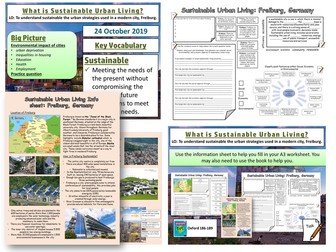
AQA GCSE Geography lesson on Sustainable Urban Living using Freiburg as an example.
Included in the lesson is:
Video clips on Freiburg
Information sheet on sustainable living in Freiburg
A3 double sided task worksheet with a variety of actvities for differing abilities
Practice GCSE Questions
You may wish to use alongside the Oxford AQA GCSE Geography textbook, but all resources are included.
Hope this helps.
https://www.tes.com/teaching-resources/shop/markthegeographer
An interactive escape room lesson that explores the meaning of ‘sustainability’. There are seven fun task cards that include activities relating to sustainability and why it is important. The lesson provides a fun and interactive introduction to the various issues and key issues surrounding sustainability, such as the three pillars of sustainability and how a sustainable future can be achieved.
Lesson Objectives:
To define what is meant by ‘sustainability’ and explain the three pillars of sustainability.
To be able to explain how a sustainable future can be achieved.
Included:
Seven task cards
PowerPoint with starter and plenary
Lesson Plan
Answer sheet for teacher
Answer sheet for students
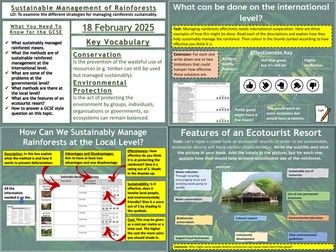
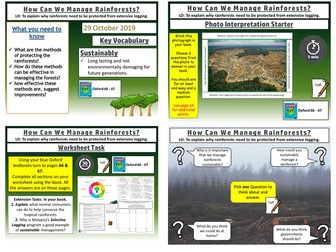
AQA GCSE Geography lesson for the 2016 specification Unit 1B: In this lesson we look at how rainforests can be managed sustainably at different levels.
We start with a retrieval practice multiple-choice task based around the content already learned in the rainforest section of the unit. We establish the definition of sustainable management before then looking at management at the international level. Students explain and rate the three types of action. We then look at some of the problems associated at the government level, students explain why these are problems and offer some solutions. We then look at the local level. Students undertake some guided reading with questions for the text, the students then complete a worksheet that asks them to rate these actions according to several criteria. We then look at the typical features and characteristics of an ecotourist resort and finish with a 4-mark GCSE style question on ecotourism and there is some tips for students who need it on how to answer it.
Hope this saves you some valuable planning time.
https://www.tes.com/teaching-resources/shop/markthegeographer
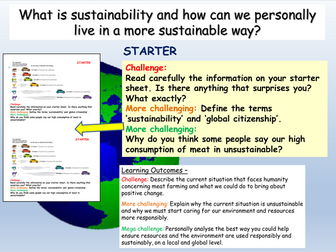
An investigation and overview of what sustainability is and then tasks with more of a focus on eating sustainably. Created as a PSHCE resource but would also be very useful for KS3 Geography or RE. - 1 hour PowerPoint, worksheets, clips, well differentiated, KS3/ KS4. These resources have been designed to be engaging, detailed and easy to follow. All our resources are editable (so easy to adapt for your classes) and are designed to last one hour each.
Chapter 24 unit from the OCR Biology A A-Level all about populations and sustainability.
The unit was planned with the intention of carrying out flipped learning whereby students do pre-reading on the topic prior to the lesson so that we can consolidate that learning with activities/exam questions during the lesson.
Including:
24.1 Population Size
24.2 Competition
24.3 Predator Prey Relationships
24.4 Conservation and Preservation
24.5 Sustainability
24.6 Masai Mara
24.7 Terai Region of Nepal
24.8 Peat Bogs
24.9 Environmentally Sensitive Ecosystems (split into two lesson, Galapagos Islands and Antarctica in lesson 1 with Snowdonia and the Lake District in lesson 2)
A lesson on EDUCATING FOR SUSTAINABILITY and how we can impact on our world both positively and negatively.
Cross curricular, action learning to inspire creative thinking and new vision to empower students toward positive environmental change.
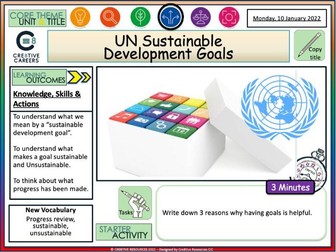
UN Sustainable development Goals. Careers + PSHE Lesson designed by a L6 Qualified Careers Guidance Leader. Editable 14+ slide PowerPoint Lesson. Lesson includes: Lesson Assessment, Student Resources, Signposting to extra support services. Bonus Homework Activity and links to our videos and much more.
Learning Outcomes:
To understand what we mean by a “sustainable development goal”.
To understand what makes a goal sustainable and Unsustainable.
To think about what progress has been made.
Some Key Terms Covered
Progress review, sustainable, unsustainable, United Nations
Assessment Objectives
I know what is meant by a “sustainable development goal”.
I can discuss what makes a goal sustainable or unsustainable.
I can review progress towards a goal.
Skills Builder Framework
Problem Solving & Leadership
CDI Framework
Manage Career
Be Ofsted and DfE compliant with our resources!
Product Code: 1918693644
✯✯✯✯✯✯✯✯✯✯✯✯✯✯✯
Each Lesson Pack Contains:
1 Fully Editable PowerPoint (Learning Outcomes, Confidence Checkers, Assessment of Learning, Variety of Tasks, Video Embedded URL Clips, Engaging Premium Quality Slides, Extra Support careers Websites, Challenging & Thoughtful Questioning)
Student Worksheet(s) are included with some lessons
Homework Activity
Assessment Opportunity (Confidence Checker)
Teacher Notes (On some slides)
Focus on literacy
1 Hours worth of activities - including timings for every activity
✯✯✯✯✯✯✯✯✯✯✯✯✯✯✯
Why not try out some of our other highly rated secondary careers units:
☞ Year 7 Gatsby Benchmark Careers in Context Unit
☞ Year 8 Gatsby Benchmark Careers in Context Unit
☞ Year 9 Gatsby Benchmark Careers in Context Unit
☞ Year 10 Gatsby Benchmark Careers in Context Unit
☞ Year 11 Gatsby Benchmark Careers in Context Unit
☞ Year 12 Gatsby Benchmark Finance & Careers in Context Unit
☞ Year 13 Gatsby Benchmark Finance & Careers in Context Unit
This PowerPoint resource is a complete and engaging lesson on “Using the Earth’s Resources and Sustainable Development” for the AQA GCSE Combined Science Chemistry specification. It introduces students to the concepts of finite and renewable resources, how humans use the Earth’s natural materials, and how sustainable development can ensure these resources are available for future generations. The lesson also explores how chemistry contributes to sustainability by developing synthetic alternatives and cleaner technologies.
The resource begins with a clear starter activity that revises key prior knowledge, including carbon footprints, fossil fuels, and changes in Earth’s atmosphere. It then moves into detailed explanations and tasks focused on natural resource use, the distinction between renewable and finite resources, and the role of chemistry in creating sustainable solutions. Students are encouraged to categorise resources, analyse graphs, and work with real-world data, including orders of magnitude calculations based on lithium reserve statistics—developing both subject knowledge and numeracy skills.
The PowerPoint includes multiple discussion prompts, structured tasks, and challenge questions that are ideal for classwork, homework, or assessment preparation. Real-world contexts like fossil fuel use, synthetic fibres, and global demand for lithium make the topic relevant and up to date. This resource was last updated in June 2025 to ensure alignment with current examples and the most recent AQA specification.
Designed specifically for the AQA GCSE Combined Science Chemistry, this PowerPoint file (.pptx) is ready to use in class or to support blended learning and revision. Key terms include sustainability, finite resources, renewable energy, fossil fuels, synthetic materials, and carbon footprint.
I have created a powerpoint and an accompanying student booklet that provide an opportunity for students of geography at KS3 to participate in ‘in-house’ fieldwork. This forms a perfect prerequesite to the GCSE AQA Fieldwork requirements and allows students to prepare for the fieldwork style of questions and data collection early. Made for my current school however could be easily adapted by changing headings to the name of your school. As you can see I have adapted from my first school to suit my second school etc.
The project focuses on:
Government initiatives for the ‘sustainable school’
Government definitions and doorways of a ‘sustainable school’
3+ data collection techniques including bipolar survery, field sketches, photographs and litter/bin counts.
Write-up opportunities
Final speech/poster composition as an assessment outcome
UN Sustainable Development Goals whole class escape room. No printing required! Just project the Powerpoint and off you go. Built in timers, Video clips and answer reveals after every slide. This is an educational fun immersive ‘Escape room’ experience.
Have the students compete individually, in teams or as a whole class the choice is yours! This resource is a great team-building activity to keep your students engaged during the last few days (or week) leading up to the end of term.
There are seven different challenging puzzles and you have the choice of setting the timer at easy, medium or high difficult level for each escape. Students will complete a variety of tasks using different skills including: problem-solving, critical thinking, reading comprehension, literacy challenges and some clever deduction to work out who has stolen the presents this Christmas.
The puzzles, bonus questions and challenges are a fun way to assess a topic or subject area. This resource covers a variety of different elements including: vocabulary, key terms. key themes, general subject knowledge, literacy and much more…
UN Sustainable Development Goals Escape Room is fully editable and takes less than 1 Minute to set up.
UN Sustainable Development Goals Escape Room Contents
☞ Interactive 26 slide Powerpoint Escape Room Challenge
☞ Optional Escape Certificates
☞ Optional Team Sheet (Print it or use scrap paper instead)
Common FAQ’s
★Group sizes: 1-30 students per team - (Participants up to 180)
★Time: Approximately 50-60 minutes (Provide hints along the way if time is a factor!)
★Materials: Aside from Powerpoint - all students need is a pen / pencil.
How to run this UN Sustainable Development Goals escape Challenge
This escape room can be done without any printing we have however still included a team sheet (Slide 2) should you wish to use it, if not plain paper will more than suffice.
The escape room is story driven by a YouTube video which is split into 9 sections.
Introduction - Puzzle 1 – Puzzle 2 - Puzzle 3 – Puzzle 4 – Puzzle 5 – Puzzle 6 – Puzzle 7 - Success
At various points you will be instructed to pause the video at these points you can go to the next slide in the presentation.
Each video section (excluding Introduction and Success) will be followed by a puzzle.
Every puzzle has three built in timers in the lower right hand corner to put the teams on a time limit of your choice if you so wish.
Once the timer has expired or everyone has completed the puzzle teams can check their answers on the next slide using the CLICK TO REVEAL boxes.
Once all answers for the current puzzle have been revealed move on to the next video section and subsequent puzzle until all 7 puzzles have been completed and everyone has escaped successfully
(Optional) Give out winning certificates to the highest scorers.
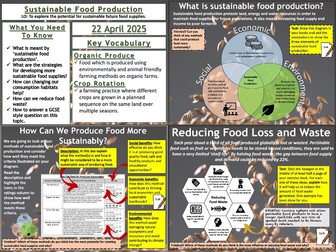
AQA GCSE Geography lesson for the 2016 specification Unit 2C, the optional unit on food management: In this fifth lesson we look at how food production can be made more sustainable.
We start with a multiple-choice retrieval practice quiz based upon content learned in earlier lessons in the unit. The students then create a Venn diagram that shows the three components of sustainable food production according to the pressure group Sustain. We then look at some methods for increasing sustainable food production and the students rate these methods by highlighting symbols that represent the components of sustainable food production identified in their previous diagram. The students then study a video example of how an urban farm in Dallas became one of the largest urban farms in America. We then complete a cloze exercise on seasonal consumption before the students complete a hexagon analysis by explaining how the methods in each hexagon help to reduce food waste and close the gap between production and consumption. We then answer a 6-mark practice question with some guidance on how the answer could be structured.
Hope this saves you some valuable planning time.
https://www.tes.com/teaching-resources/shop/markthegeographer
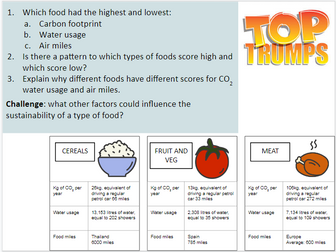
As part of a Sustainable Earth scheme of work (also available on TES) this is a lesson in which students can get to grips with the environmental impact of their food. The slides include a tops trumps game which can be printed off and made in to a deck of cards. They each have the carbon emissions of production, water usage and food miles, making this a fun way to learn.
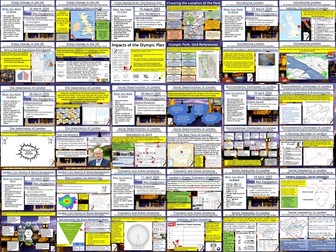
Complete Complete sequence of lessons for the AQA GCSE Geography Unit 2, Section A, Urban Change in the UK and the Sustainable Urban Development lessons. The case study for the unit is London. SIngapore and Beijing are used as examples for the traffic management strategies lesson.
Included are the lessons in this suggested sequence.
Urban Change in the UK
Where Do People in the UK Live?
Introducing London
The Importance of London
Social Opportunities in London
Economic Opportunities in London
Transport and Urban Greening
Social Inequality in London
London’s Environmental Challenges
Air Quality and Waste Management in London
The Olympic Plan
Sustainable Urban Development
Planning for Urban Sustainability
Traffic Management Strategies
Additional lesson: Sustainable Living in Freiburg
Hope this saves you some valuable planning time.
https://www.tes.com/teaching-resources/shop/markthegeographer
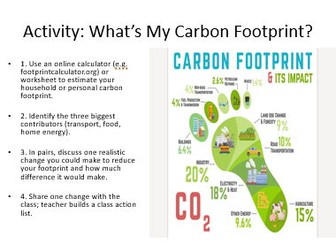
This ready-to-use lesson gives students a clear understanding of how energy can be used more sustainably at both global and local scales. Using Malmö in Sweden as a high-income case study, pupils learn how cities reduce demand and use technology to increase efficiency. They then discover how the Chambamontera micro-hydro scheme in Peru provides renewable power to a remote community, highlighting the social, economic and environmental benefits of appropriate technology. The lesson includes an attractive PowerPoint, a student worksheet, interactive activities on individual carbon footprints and energy conservation, and a model AQA-style 6-mark answer to build exam skills — everything you need for a high-quality, exam-focused session on sustainable energy.
Solar energy is a renewable energy source which has great input to the survival of humanity. Every area of man's life has a great demand for energy. Solar energy is useful in cooking, plants growth, heating of homes, etc.
For AQA GCSE Geography. You need the Oxford AQA GCSE Geography Textbook for the new specification
The lesson includes.
Photo interpretation starter.
Questioning activity
Video clips
Large A3 worksheet with a variety of different activities covering the required content.
Plenary activity.
All worksheets for photocopying included. Hope this helps.
https://www.tes.com/teaching-resources/shop/markthegeographer
Save hours of planning with my purpose made premium teaching resources —designed by an experienced educator who understand what really works.
All powerpoints are designed to fully cover the criteria within the up to date syllabus for the subject and help you engage students instantly while maintaining rigorous academic standards.
Perfect for in-person, hybrid, or fully online learning, our resources are customizable, curriculum-aligned, and built to boost student confidence and results. Stop spending late nights creating materials from scratch and start focusing on what matters most — inspiring your students.
This powerpoint is purposefully made for AS Level Geography using the Cambridge syllabus.
It fully covers - 6.3 Sustainable urban development
6.3.1 Challenges of sustainability in urban development
• The concept of sustainability.
• Difficulties in measuring sustainability.
• Balance between environmental, social, economic and political priorities and the view of different
groups of people (residents, landowners, local business owners, community groups, local and national
government).
6.3.2 Sustainability issues in urban areas
• Solid waste disposal, transport (public and private) and quality and density of housing.
• Role of green space and water features.
6.3.3 Strategies for the sustainable management of urban areas
• Strategies for reducing the issues of solid waste disposal, pollution, transport and housing.
• Constraints on and incentives to successful management of urban areas.
• Detailed specific example from one urban area: the challenges in sustainable management, the strategy
or scheme used, and evaluation of the relative success of the strategy or scheme.
This lesson supports understanding of the concept of sustainability, a core component of all GCSE Geography specifications. It leads from the sustainability of different types of infrastructure (leading on from the previous lesson in this series) to investigate public investment in infrastructure (and how sustainable this may be), then leads onto core components of a GCSE course and examines the concept of sustainability in those contexts. It is fully resourced with engaging developmental activities.
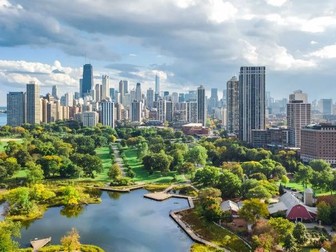
A lesson which assigns students the role of urban planners and tasks them with designing a sustainable city.
The task is fully scaffolded as students work through a planning booklet , filling it out based on structured class discussions of the different features needed- energy, waste management, nature, food, housing, infrastructure etc.
Lots of ideas are included in the notes section of the PPT slides to steer the pupils ideas. Loads of pictures and real world examples too.
A design brief outlining what students need to include in their cities is also included, as is a peer assessment sheet


 Quick View