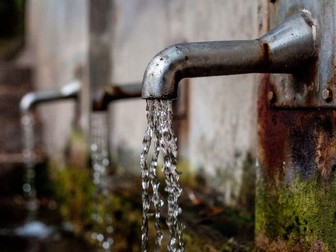
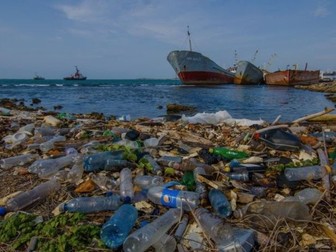
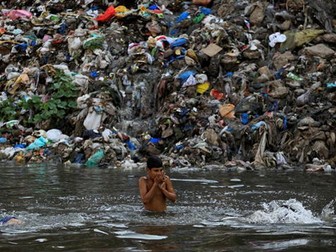
This presentation is designed for KS2 students, aged 6-7 (Year 2). The slides cover ‘What is water?’ and ‘Why is clean water important?’ The presentation also explores water pollution, featuring pictures of both a clean water environment and a polluted one. Subsequent slides discuss how water pollution occurs, the consequences of polluted water, and ways we can help prevent pollution.
The presentation is visually appealing, with numerous pictures, making it child-friendly and enhancing the understanding of the content. The goal is to help children make connections and develop awareness about the importance of clean water and the impact of pollution
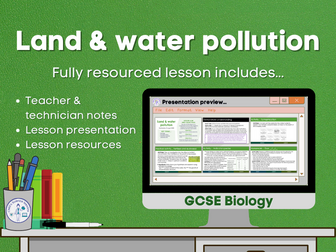
Land and water pollution is a comprehensive lesson designed to help GCSE students develop their understanding of some of the negative impacts on ecosystems from polluting the land and water through engaging activities and differentiated instruction.
This lesson is the 2nd in a series of lessons and covers the content from the AQA 4.7.3.2 Waste management lesson (B7 Ecology unit), and AQA GCSE Biology OUP Scheme B18.2 Land and water pollution lesson (B18 Biodiversity and ecosystems chapter).
All resources are included, making it easy to run the lesson straight away. All text is editable, so you can adjust the depth, pace, or challenge to suit your class and the time you have available.
Presentation contains (35 slides)-
● Lesson Prep and Technician Notes: Guidance notes for teachers to prepare the lesson and technician instructions.
● Bell Work / Do Now Activity: Engaging task to activate student prior knowledge and set the stage for the lesson.
● Clear Lesson Aim, Objectives & Success Criteria: Explicitly defined learning targets to guide students and measure their understanding.
● Discussion Slides: Thought-provoking prompts and questions to introduce the topic.
● Information Slides with Levelled Content: Varied levels of information catering to diverse learning styles and abilities.
● Differentiated Activities (Group Work): Collaborative tasks in small groups to encourage active participation and enhance learning.
● Practical Activity: Hands-on experience to apply concepts and gain practical skills.
● Differentiated Questions with Answers: Comprehensive questions with accompanying solutions for self-assessment and note-taking.
● Student Worksheets/Handouts: Printable materials for students to complete and gather notes.
● Homework Activities: Varied homework tasks to cater to individual needs and promote independent learning.
Aimed at a mixed ability class covering content Grades 1-9, with three levels of demand to accommodate different learning styles and levels.
● Level 1: Low demand
● Level 2: Standard demand
● Level 3: High demand
This lesson is also available as a digital worksheet, which is ideal for absent students to catch-up missed work, distance learning, home schooling, or independent study.
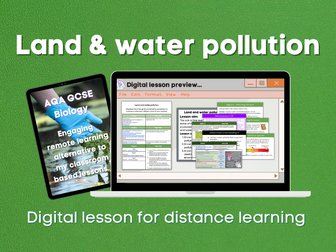
Land and water pollution Distance learning
If you require more assistance, please contact me at-
info@cmgsciencelessons.com
During this engaging distance learning lesson on land and water pollution GCSE students work through the digital worksheet activities to develop their understanding of some of the negative impacts on ecosystems from polluting the land and water. This adaptable resource is perfect for distance learning, independent study, home-schooling, addressing missed content, and non-specialist cover lessons.
This lesson is the 2nd in a series of lessons and covers the content from the AQA 4.7.3.2 Waste management lesson (B7 Ecology unit), and AQA GCSE Biology OUP Scheme B18.2 Land and water pollution lesson (B18 Biodiversity and ecosystems chapter).
Aimed at a mixed ability class covering content Grades 1-9.
This editable resource includes (4 pages):
● Teacher guidance and answers: Clear instructions and solutions for teachers.
● Engagement: Self-assessed vocabulary task, using Google Sheets, to reinforce key vocabulary.
● Exploration: Links to articles, video clips, virtual labs, and simulations allow students to explore the topic in-depth.
● Explanation: An embedded Google Slides™ presentation that clearly outlines lesson objectives, provides detailed information slides, and includes self-assessed questions for students to check their comprehension.
● Application: Engaging activities and tasks encourage students to apply their knowledge gained during the lesson.
● Extension: Resources and activities that challenge students to further explore the topic and extend their learning.
Important:
● Internet Access: Students require a PC with internet access to use this resource.
● Google Doc™ Format: This resource is best used in Google Doc™ format. While it can be converted to Word/Excel, some tasks may not function properly in these formats.
If you require more assistance, please contact me at-
info@cmgsciencelessons.com
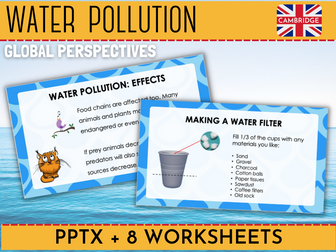
This lesson will help students to understand the importance of water. Students will find out how much water they have in their bodies and how much they need to drink daily. Learners will also learn about the causes and effects of water pollution and will make water filters.
The lesson follows the Cambridge Global Perspectives Curriculum for stage 3.
This package includes:
PPTX ( 22 slides with editable text)
8 PDF Worksheets
Answer Keys
Save precious planning time and elevate your classroom experience with our all-in-one Biology teaching package. This resource includes meticulously crafted lesson PowerPoint with learning objectives, quality content, and multiple-choice plenary questions, engaging worksheets, and multiple practice question PowerPoints complete with model answers. Designed to align with GCSE curriculum standards, these materials ensure comprehensive coverage of key topics. Ideal for busy teachers seeking high-quality, ready-to-use resources that facilitate effective learning and assessment.
Water Pollution & Eutrophication
This comprehensive lesson includes:
Detailed Lesson Plan: Perfect for both new and experienced teachers, providing clear guidance on lesson delivery.
Engaging PowerPoint Presentation: Easy-to-follow slides with clearly defined learning objectives, engaging content, discussion questions, and multiple-choice plenary questions to reinforce learning.
Complete Summary Notes: Student-friendly notes that cover key concepts and address common misconceptions, making it easier for students to grasp the material.
Differentiated Questions: At least 10 mixed-ability questions designed to challenge all students and ensure understanding at every level.
Relevant Worksheets: Tailored to reinforce lesson content and enhance student understanding through practical application.
This is a complete, hassle-free, off-the-shelf resource package designed to save you time and ensure your students excel. Elevate your teaching and provide your students with the tools they need to succeed with the “Characteristics of Living Organisms” lesson.
Get your complete teaching package now on TES!
Are you looking for a fun to talk about water pollution that is also informative? If you are teaching about environmental issues, there is a lot of facts and topics for students to process. This non-prep lesson focuses on water pollution. Children will be able to learn about what water pollution is and the important role it plays in climate change. The slides are colorful and full of information. It’s a useful addition to any unit of work on climate change or the environment. There are duplicates of some slides depending on whether you prefer to use U.S. English or British English, simply delete the slide that contains the spelling that is not applicable to you. You can pick and chose what to teach without hours of lesson prep! Also included are slides which provide foundational knowledge about types of water bodies. There are opportunities for children to answer questions, both structured and unstructured, to express their views and to do some research (under the supervision of a responsible adult if they are learning from home). This is a useful resource for distance learning, whole class teaching or for instruction in small groups using a device. Worksheets for follow up work are also included.
95 page slide show packed with information and questions - delete or rearrange according to your lesson requirements.
Water Pollution - lesson objective
Our Earth - water facts
Fresh water sources
Glaciers
Ponds
Rivers
Ice caps
Clouds
Underground water - cave water
Oceans and Seas
Freshwater pollutants
Contaminating the water
Releasing pollutants into the water sources
Effluent and water sources
Types of water pollution
How can I tell the difference between point source and non-point source pollution?
More about point source pollution
More about non-point source pollution
The importance of water
Nonpoint source pollution and the landscape
Doing our part to prevent water pollution
How do we contribute to non point source pollution?
The river Ganga (The river Ganges)
The River Thames (London) and the ‘great stink’
Industry and water pollution
Water pollution - impact
What are the main effects of water pollution?
What do you know about water pollution?
Water pollution - what it means for us and our environment
Micro-plastics
The dead zone - fertilizers, algae and the Gulf of Mexico
Acid rain
Discussion time
We can work together
How can we reduce water pollution?
Categories for research
What do you know about…?
Final thought
Worksheets:
The effects of water pollution 2 versions
Doing better
What do I waste?
Design worksheet
Point and non-point sources
Point and non-point source vocabulary activity
Water pollution word search
Water pollution foldable - point source and nonpoint source pollution
Water pollution foldable - 3 versions
True or false water pollution activity
This starter activity provides a quick, engaging introduction to a lesson focusing on the link between water pollution and health by considering the role of engineers in providing us with healthy water supplies
Water is crucial to human life, but it can also be a killer. Water contaminated with micro-organisms or chemicals, which if then used for drinking or cooking, is a leading cause of disease and death across the world. Poor facilities for the disposal of sewage and other waste water can quickly lead to the spread of dangerous diseases.
The lesson therefore encourages students to think about the role of engineers in providing us with healthy water supplies and waste-water disposal systems. The activity also asks students to think more broadly about how engineers play a role in society, at times saving our lives.
This is one of a set of resources developed to aid the teaching of the secondary national curriculum, particularly KS3, supporting the teaching in science, geography and engineering.
Activity: Considering the role of engineers in providing us with healthy water supplies
Students will watch our Safe drinking water film, and discuss how engineers play a role in saving peoples lives.
Following this, students can work through our Running water handout, which provides information about the problems associated with water supplies and water pollution and how engineers work to solve these problems so that we can access clean water.
Finally, students can take our quiz on the importance of water to human life.
Download our activity overview for a detailed lesson plan for teaching students about design materials.
The engineering context
To help ensure that we can access clean water freely, engineers can develop filtration systems to remove impurities, build water networks for distribution, and use chemical treatments to purify waste. They can also make reservoirs to make sure that there’s a reliable water supply as well as build wastewater treatment systems protect the environment. In areas with limited freshwater, engineers even design desalination plants to transform seawater into drinking water.
Suggested learning outcomes
At the end of this lesson students will be aware that clean water supplies and effective methods of waste-water disposal are essential for human health. They’ll also understand some of the methods that engineers create and use to make water safe.
Download our activity sheet and related teaching resources for free
The activity sheet includes teachers’ notes, useful web links, and links (where appropriate) to the national curriculum in each of the four devolved nations; England, Northern Ireland, Scotland and Wales.
All activity sheets and supporting resources are free to download (including video clips), and all the documents are fully editable, so you can tailor them to your students’ and your schools’ needs.
Please do share your highlights with us @IETeducation.
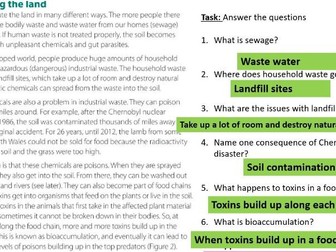
This lesson was intended for AQA (9-1) GCSE but is easily adapted and covers topics such as eutrophication, bioaccumulation and waste management and the Chernobyl disaster. It is a full lesson which includes starter, engaging introductory activities, storyboard activity and then a challenging exam question to assess understanding which can be set as homework or used during the lesson (and the storyboard could be part set as homework).
KS4
Lesson covers how we use water (and waste it), key terms (supply, deficit etc), sources of water pollution and their impacts, and algal blooms
All resources contained with the ppt
Three activities included:
Outdoor Learning - Create clean water using a range of equipment
Literacy - Inference
ICT - Create a game on SCRATCH or J2E
Resources included:
Inference sheets - 3 challenges
Outdoor Learning - 3 challenges
ICT Success criteria - 3 challenges
Lesson Plan
Some words are in Welsh, therefore I’ve included the word documents so these can be removed.
This Year 10 Geography lesson examines the growing challenge of water pollution in UK rivers, helping students understand how freshwater systems are monitored, protected and restored. Learners explore the primary sources of pollution—such as sewage discharge, agricultural runoff and industrial waste—before investigating the work of limnologists, the freshwater scientists dedicated to studying and safeguarding river health.
Students assess how pollutants affect ecosystems, biodiversity and human wellbeing, and evaluate a range of strategies used to protect and restore river systems. The lesson builds strong analytical and environmental literacy skills, linking physical geography to real‑world ecological issues.
A PPT and worksheet are included, providing a ready‑to‑teach resource that supports explanation, scientific understanding and evaluative thinking.
Learning Objective:
To understand the causes, impacts and management of water pollution in UK rivers.
Success Criteria:
Identify the primary sources of UK river pollution.
Understand the work of limnologists in monitoring freshwater health.
Assess the impact of sewage and agricultural runoff on ecosystems.
Evaluate methods for protecting and restoring river systems.
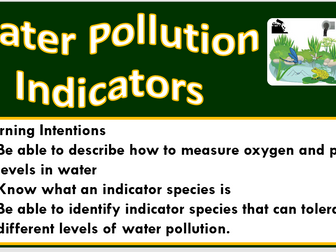
SB9e lesson from the new Edexcel Biology GCSE (9-1) all about assessing pollution.
The lesson includes what indicator species are, indicator species for air pollution and indicator species for water pollution.
“Article & Questions” Assignment
Assignment:
Students read the Article.
Students answer 6-7 Questions.
*Note: This purchase includes both a PDF and WORD version of the assignment
PDF: Best used in class or for homework
WORD: Best for online, remote learning or uploading to Google Classroom
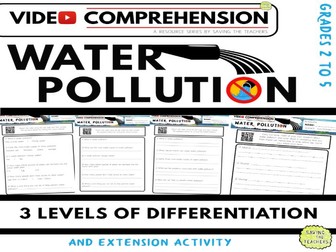
This video comprehension takes a look at water pollution and the impacts it has on the environment. Your students will watch a video where they will learn about what the water pollution is, what causes it, the environmental impact, as well as what we can do to help stop water pollution.
This pack contains 3 levels of differentiation as well as an extension activity where they will carry out further research to find 5 interesting facts about water pollution.
What is video comprehension?
Our video comprehension series is designed to facilitate the learning of those students who find reading tricky. It allows them to access the same level of learning without the need to read large amounts of information as they will watch a video on the topic rather than reading large amounts of text. We have found it especially helpful with our SEN students.
Each set is differentiated three times. With the first level of differentiation requiring them to simply circle the correct answers.
These worksheets work best if each student has their own device as they can re-watch parts of the video to find the correct answers. However if you don’t have one device per students or pair we have done this with great success by having the video on repeat on the board / tv at the front of the classroom.
These activities are also perfect for home and distance learning.
We are constantly expanding our range of video comprehension worksheets so be sure to check back frequently for new resources.
Check out our other video comprehension packs:
- Compost
- Ozone Depletion
Please don’t forget to rate this resource to let us know what you think.
Also be sure to visit my store and FOLLOW ME to see my new products and hear about upcoming sales!


 Quick View