KS3 Music Keyboard Skills UnitQuick View
roryhird2

KS3 Music Keyboard Skills Unit

(0)
This is a 6-lesson Key Stage 3 unit focussing on developing students’ keyboard skills. It is comprised of four lessons of content followed by two lessons of assessment. This is a performance-focussed unit; I like to alternate between the practical focus of KS3 lessons between performance and composition each half-term. I use this as a Year 7 unit at my school, but it would work well and has sufficient support and challenge for any Key Stage 3 year group - I have removed all references to any year group to make it easy to adapt to the year group you intend to use it for. As with all my resources, all lessons include: • a starter task • three clear objectives increasing in challenge using verbs from Blooms’ taxonomy. Typically this involves some theory/contextual knowledge and a listening exercise followed by (most importantly!) practical application on instruments • tasks that explicitly work towards each objective (each slide has a header with the lesson objective the task/activity works towards at the top) • assessment for learning/quiz slides or tasks to check for understanding against each objective as it is completed throughout the lesson • practical resources with detailed scaffolding supporting weaker students to make rapid progress • a plenary slide at the end of the lesson I work in an international context and my students use Google Classroom to access the PowerPoints and work from the slides during practical tasks, but the key slides could easily be printed for students who don’t have access to tablet devices in school. Students are only assessed on content taught in the first four lessons. Students are assessed on their knowledge (practical and theory) and listening skills in a short 20-mark written assessment in Lesson 5, and then given ample time in Lessons 1-5 to prepare for an individually assessed performance assessment, learning to play Bill Withers’ Lean on Me on the keyboard, with differentiated resources form Level 1 (the first 8 bars of the melody) to Level 5 (a more challenging piano arrangement with independent hands). I have made the assessment criteria a generic Level 1-5 system to make it easy to adapt to the specific assessment system of your school. As well as the PowerPoint files, I have included the Knowledge and Listening Assessment pdf which needs to be printed for students to complete in Lesson 5, as well as an Answers pdf for teachers.
KS3 Music Blues UnitQuick View
roryhird2

KS3 Music Blues Unit

(0)
This is a 6-lesson Key Stage 3 unit focussing on developing students’ performance and improvisation skills. It is comprised of four lessons of content followed by two lessons of assessment. This is a performance and improvisation-focussed unit; I like to alternate between the practical focus of KS3 lessons between performance and composition each half-term. I use this as a Year 8 unit at my school, but it would work well and has sufficient support and challenge for any Key Stage 3 year group - I have removed all references to any year group to make it easy to adapt to the year group you intend to use it for. As with all of my resources, all lessons include: • a starter task • three clear objectives increasing in challenge using verbs from Blooms’ taxonomy. Typically this involves some theory/contextual knowledge and a listening exercise followed by (most importantly!) practical application on instruments • tasks that explicitly work towards each objective (each slide has a header with the lesson objective the task/activity works towards at the top) • assessment for learning/quiz slides or tasks to check for understanding against each objective as it is completed throughout the lesson • practical resources with detailed scaffolding supporting weaker students to make rapid progress • a plenary slide at the end of the lesson I work in an international context and my students use Google Classroom to access the powerpoints and work from the slides during practical tasks, but the key slides could easily be printed for students who don’t have access to tablet devices in school. Students are only assessed on content taught in the first four lessons. Students are assessed on their knowledge (practical and theory) and listening skills in a short 20-mark written assessment in Lesson 5, and then given ample time in Lessons 1-5 to prepare for an individually assessed improvisation assessment, improviding on their chosen instrument using the blues scale over the 12-bar blues progression. I have made the assessment criteria a generic Level 1-5 system to make it easy to adapt to the specific assessment system of your school. As well as the powerpoint files, I have included the Knowledge and Listening Assessment pdf which needs to be printed for students to complete in Lesson 5, as well as an Answers pdf for teachers.
KS3 Music Instruments of the Orchestra UnitQuick View
roryhird2

KS3 Music Instruments of the Orchestra Unit

(0)
This is a 6-lesson Key Stage 3 unit focussing on developing students’ performance skills and knowledge of the instruments of the orchestra. It is comprised of four lessons of content followed by two lessons of assessment. This is a performance-focussed unit; I like to alternate between the practical focus of KS3 lessons between performance and composition each half-term. I use this as a Year 7 unit at my school, but it would work well and has sufficient support and challenge for any Key Stage 3 year group - I have removed all references to any year group to make it easy to adapt to the year group you intend to use it for. As with all of my resources, all lessons include: • a starter task • three clear objectives increasing in challenge using verbs from Blooms’ taxonomy. Typically this involves some theory/contextual knowledge and a listening exercise followed by (most importantly!) practical application on instruments • tasks that explicitly work towards each objective (each slide has a header with the lesson objective the task/activity works towards at the top) • assessment for learning/quiz slides or tasks to check for understanding against each objective as it is completed throughout the lesson • practical resources with detailed scaffolding supporting weaker students to make rapid progress • a plenary slide at the end of the lesson I work in an international context and my students use Google Classroom to access the powerpoints and work from the slides during practical tasks, but the key slides could easily be printed for students who don’t have access to tablet devices in school. Students are only assessed on content taught in the first four lessons. Students are assessed on their knowledge (practical and theory) and listening skills in a short 20-mark written assessment in Lesson 5, and then given ample time in Lessons 1-5 to prepare for an individually assessed class performance of Shostakovich’s Waltz No. 2. I have made the assessment criteria a generic Level 1-5 system to make it easy to adapt to the specific assessment system of your school. As well as the powerpoint files, I have included the Knowledge and Listening Assessment pdf which needs to be printed for students to complete in Lesson 5, as well as an Answers pdf for teachers.
KS3 Music Tango UnitQuick View
roryhird2

KS3 Music Tango Unit

(0)
This is a 6-lesson Key Stage 3 unit focussing on developing students’ performance skills and knowledge of Tango music. It is comprised of four lessons of content followed by two lessons of assessment. This is a performance-focussed unit; I like to alternate between the practical focus of KS3 lessons between performance and composition each half-term. I use this as a Year 7 unit at my school, but it would work well and has sufficient support and challenge for any Key Stage 3 year group - I have removed all references to any year group to make it easy to adapt to the year group you intend to use it for. As with all of my resources, all lessons include: • a starter task • three clear objectives increasing in challenge using verbs from Blooms’ taxonomy. Typically this involves some theory/contextual knowledge and a listening exercise followed by (most importantly!) practical application on instruments • tasks that explicitly work towards each objective (each slide has a header with the lesson objective the task/activity works towards at the top) • assessment for learning/quiz slides or tasks to check for understanding against each objective as it is completed throughout the lesson • practical resources with detailed scaffolding supporting weaker students to make rapid progress • a plenary slide at the end of the lesson I work in an international context and my students use Google Classroom to access the powerpoints and work from the slides during practical tasks, but the key slides could easily be printed for students who don’t have access to tablet devices in school. Students are only assessed on content taught in the first four lessons. Students are assessed on their knowledge (practical and theory) and listening skills in a short 20-mark written assessment in Lesson 5, and then given ample time in Lessons 1-5 to prepare group performances of Tango Argentina. I have made the assessment criteria a generic Level 1-5 system to make it easy to adapt to the specific assessment system of your school. As well as the powerpoint files, I have included the Knowledge and Listening Assessment pdf which needs to be printed for students to complete in Lesson 5, as well as an Answers pdf for teachers.
KS3 Music Ukelele and Guitar Skills UnitQuick View
roryhird2

KS3 Music Ukelele and Guitar Skills Unit

(0)
This is a 6-lesson Key Stage 3 unit focussing on developing students’ Ukelele and Guitar Skills. It is comprised of four lessons of content followed by two lessons of assessment. This is a performance-focussed unit; I like to alternate between the practical focus of KS3 lessons between performance and composition each half-term. I use this as a Year 7 unit at my school, but it would work well and has sufficient support and challenge for any Key Stage 3 year group - I have removed all references to any year group to make it easy to adapt to the year group you intend to use it for. As with all of my resources, all lessons include: a starter task three clear objectives increasing in challenge using verbs from Blooms’ taxonomy. Typically this involves some theory/contextual knowledge and a listening exercise followed by (most importantly!) practical application on instruments tasks that explicitly work towards each objective (each slide has a header with the lesson objective the task/activity works towards at the top) assessment for learning/quiz slides or tasks to check for understanding against each objective as it is completed throughout the lesson practical resources with detailed scaffolding supporting weaker students to make rapid progress a plenary slide at the end of the lesson I work in an international context and my students use Google Classroom to access the powerpoints and work from the slides during practical tasks, but the key slides could easily be printed for students who don’t have access to tablet devices in school. Students are only assessed on content taught in the first four lessons. Students are assessed on their knowledge (practical and theory) and listening skills in a short 20-mark written assessment in Lesson 5, and then given ample time in Lessons 1-5 to prepare group performances of four-chords songs using ukeleles, guitars and their voices. I have made the assessment criteria a generic Level 1-5 system to make it easy to adapt to the specific assessment system of your school. As well as the powerpoint files, I have included the Knowledge and Listening Assessment pdf which needs to be printed for students to complete in Lesson 5, as well as an Answers pdf for teachers.
Edexcel A Level Music - The Beatles 'Eleanor Rigby' Element MapQuick View
roryhird2

Edexcel A Level Music - The Beatles 'Eleanor Rigby' Element Map

(0)
I create these ‘Element Maps’ for my A Level Music classes. They are essentially element-based mind maps, but they are catered to the 30-mark essay in Section C of the Edexcel A Level Music Listening & Appraising paper. I ask my students to structure their element paragraphs using the following template: a general description of the element in the set work two specific features of the element in the set work, linked to two relevant corresponding wider listening references a link to their argument The ‘Element Maps’ that I create are therefore structured like this, with a box for each of these aspects of a model paragraph for every element. I feel that this equips students comprehensively for Section C of the exam. Please note: this is not a resource with detailed analysis of the set work, the idea here is to strip back the detail found in the Edexcel notes and anthology to make it more manageable for students to prepare for the exam. Finally, I think the strength of these resources lies in the fact that AOS4: Popular Music is the Area of Study that I feel most at home in, and I therefore feel that I have been able to provide a wide range of interesting and relevant wider listening references for students. The feedback from my students has been very positive so far, but I would welcome further feedback!
Edexcel A Level Music - Courtney Pine 'Inner State of Mind' Element MapQuick View
roryhird2

Edexcel A Level Music - Courtney Pine 'Inner State of Mind' Element Map

(0)
I create these ‘Element Maps’ for my A Level Music classes. They are essentially element-based mind maps, but they are catered to the 30-mark essay in Section C of the Edexcel A Level Music Listening & Appraising paper. I ask my students to structure their element paragraphs using the following template: a general description of the element in the set work two specific features of the element in the set work, linked to two relevant corresponding wider listening references a link to their argument The ‘Element Maps’ that I create are therefore structured like this, with a box for each of these aspects of a model paragraph for every element. I feel that this equips students comprehensively for Section C of the exam. Please note: this is not a resource with detailed analysis of the set work, the idea here is to strip back the detail found in the Edexcel notes and anthology to make it more manageable for students to prepare for the exam. Finally, I think the strength of these resources lies in the fact that AOS4: Popular Music is the Area of Study that I feel most at home in, and I therefore feel that I have been able to provide a wide range of interesting and relevant wider listening references for students. The feedback from my students has been very positive so far, but I would welcome further feedback!
Edexcel A Level Music - Kate Bush 'Under Ice' Element MapQuick View
roryhird2

Edexcel A Level Music - Kate Bush 'Under Ice' Element Map

(0)
I create these ‘Element Maps’ for my A Level Music classes. They are essentially element-based mind maps, but they are catered to the 30-mark essay in Section C of the Edexcel A Level Music Listening & Appraising paper. I ask my students to structure their element paragraphs using the following template: a general description of the element in the set work two specific features of the element in the set work, linked to two relevant corresponding wider listening references a link to their argument The ‘Element Maps’ that I create are therefore structured like this, with a box for each of these aspects of a model paragraph for every element. I feel that this equips students comprehensively for Section C of the exam. Please note: this is not a resource with detailed analysis of the set work, the idea here is to strip back the detail found in the Edexcel notes and anthology to make it more manageable for students to prepare for the exam. Finally, I think the strength of these resources lies in the fact that AOS4: Popular Music is the Area of Study that I feel most at home in, and I therefore feel that I have been able to provide a wide range of interesting and relevant wider listening references for students. The feedback from my students has been very positive so far, but I would welcome further feedback!
Edexcel A Level Music - The Beatles 'I Want To Tell You' Element MapQuick View
roryhird2

Edexcel A Level Music - The Beatles 'I Want To Tell You' Element Map

(0)
I create these ‘Element Maps’ for my A Level Music classes. They are essentially element-based mind maps, but they are catered to the 30-mark essay in Section C of the Edexcel A Level Music Listening & Appraising paper. I ask my students to structure their element paragraphs using the following template: a general description of the element in the set work two specific features of the element in the set work, linked to two relevant corresponding wider listening references a link to their argument The ‘Element Maps’ that I create are therefore structured like this, with a box for each of these aspects of a model paragraph for every element. I feel that this equips students comprehensively for Section C of the exam. Please note: this is not a resource with detailed analysis of the set work, the idea here is to strip back the detail found in the Edexcel notes and anthology to make it more manageable for students to prepare for the exam. Finally, I think the strength of these resources lies in the fact that AOS4: Popular Music is the Area of Study that I feel most at home in, and I therefore feel that I have been able to provide a wide range of interesting and relevant wider listening references for students. The feedback from my students has been very positive so far, but I would welcome further feedback!
Edexcel A Level Music - Clara Schumann Element MapQuick View
roryhird2

Edexcel A Level Music - Clara Schumann Element Map

(0)
I create these ‘Element Maps’ for my A Level Music class. They are essentially element-based mind maps, but they are catered to the 30-mark essay in Section C of the Edexcel A Level Music Listening & Appraising paper. I ask my students to structure their element paragraphs using the following template: a general description of the element in the set work two specific features of the element in the set work, linked to two relevant corresponding wider listening references a link to their argument The ‘Element Maps’ that I create are therefore structured like this, with a box for each of these aspects of a model paragraph for every element. I feel that this equips students comprehensively for Section C of the exam. Please note: this is not a resource with detailed analysis of the set work, the idea here is to strip back the detail found in the Edexcel notes and anthology to make it more manageable for students to prepare for the exam. The feedback from my students has been very positive so far, but I would welcome further feedback!
Edexcel A Level Music - Courtney Pine 'Lady Day and John Coltrane' Element MapQuick View
roryhird2

Edexcel A Level Music - Courtney Pine 'Lady Day and John Coltrane' Element Map

(0)
I create these ‘Element Maps’ for my A Level Music classes. They are essentially element-based mind maps, but they are catered to the 30-mark essay in Section C of the Edexcel A Level Music Listening & Appraising paper. I ask my students to structure their element paragraphs using the following template: a general description of the element in the set work two specific features of the element in the set work, linked to two relevant corresponding wider listening references a link to their argument The ‘Element Maps’ that I create are therefore structured like this, with a box for each of these aspects of a model paragraph for every element. I feel that this equips students comprehensively for Section C of the exam. Please note: this is not a resource with detailed analysis of the set work, the idea here is to strip back the detail found in the Edexcel notes and anthology to make it more manageable for students to prepare for the exam. Finally, I think the strength of these resources lies in the fact that AOS4: Popular Music is the Area of Study that I feel most at home in, and I therefore feel that I have been able to provide a wide range of interesting and relevant wider listening references for students. The feedback from my students has been very positive so far, but I would welcome further feedback!
Edexcel A Level Music - The Beatles 'Here, There and Everywhere' Element MapQuick View
roryhird2

Edexcel A Level Music - The Beatles 'Here, There and Everywhere' Element Map

(0)
I create these ‘Element Maps’ for my A Level Music classes. They are essentially element-based mind maps, but they are catered to the 30-mark essay in Section C of the Edexcel A Level Music Listening & Appraising paper. I ask my students to structure their element paragraphs using the following template: a general description of the element in the set work two specific features of the element in the set work, linked to two relevant corresponding wider listening references a link to their argument The ‘Element Maps’ that I create are therefore structured like this, with a box for each of these aspects of a model paragraph for every element. I feel that this equips students comprehensively for Section C of the exam. Please note: this is not a resource with detailed analysis of the set work, the idea here is to strip back the detail found in the Edexcel notes and anthology to make it more manageable for students to prepare for the exam. Finally, I think the strength of these resources lies in the fact that AOS4: Popular Music is the Area of Study that I feel most at home in, and I therefore feel that I have been able to provide a wide range of interesting and relevant wider listening references for students. The feedback from my students has been very positive so far, but I would welcome further feedback!
Edexcel A Level Music - The Beatles 'Tomorrow Never Knows' Element MapQuick View
roryhird2

Edexcel A Level Music - The Beatles 'Tomorrow Never Knows' Element Map

(0)
I create these ‘Element Maps’ for my A Level Music classes. They are essentially element-based mind maps, but they are catered to the 30-mark essay in Section C of the Edexcel A Level Music Listening & Appraising paper. I ask my students to structure their element paragraphs using the following template: a general description of the element in the set work two specific features of the element in the set work, linked to two relevant corresponding wider listening references a link to their argument The ‘Element Maps’ that I create are therefore structured like this, with a box for each of these aspects of a model paragraph for every element. I feel that this equips students comprehensively for Section C of the exam. Please note: this is not a resource with detailed analysis of the set work, the idea here is to strip back the detail found in the Edexcel notes and anthology to make it more manageable for students to prepare for the exam. Finally, I think the strength of these resources lies in the fact that AOS4: Popular Music is the Area of Study that I feel most at home in, and I therefore feel that I have been able to provide a wide range of interesting and relevant wider listening references for students. The feedback from my students has been very positive so far, but I would welcome further feedback!
Edexcel A Level Music - Kate Bush 'Cloudbusting' Element MapQuick View
roryhird2

Edexcel A Level Music - Kate Bush 'Cloudbusting' Element Map

(1)
I create these ‘Element Maps’ for my A Level Music classes. They are essentially element-based mind maps, but they are catered to the 30-mark essay in Section C of the Edexcel A Level Music Listening & Appraising paper. I ask my students to structure their element paragraphs using the following template: a general description of the element in the set work 2 specific features of the element in the set work, linked to 2 relevant corresponding wider listening references a link to their argument The ‘Element Maps’ that I create are therefore structured like this, with a box for each of these aspects of a model paragraph for every element. I feel that this equips students comprehensively for Section C of the exam. Please note: this is not a resource with detailed analysis of the set work, the idea here is to strip back the detail found in the Edexcel notes and anthology to make it more manageable for students to prepare for the exam. Finally, I think the strength of these resources lies in the fact that AOS4: Popular Music is the Area of Study that I feel most at home in, and I therefore feel that I have been able to provide a wide range of interesting and relevant wider listening references for students. The feedback from my students has been very positive so far, but I would welcome further feedback!
Edexcel A Level Music - Courtney Pine 'Love & Affection' Element MapQuick View
roryhird2

Edexcel A Level Music - Courtney Pine 'Love & Affection' Element Map

(0)
I create these ‘Element Maps’ for my A Level Music classes. They are essentially element-based mind maps, but they are catered to the 30-mark essay in Section C of the Edexcel A Level Music Listening & Appraising paper. I ask my students to structure their element paragraphs using the following template: a general description of the element in the set work two specific features of the element in the set work, linked to two relevant corresponding wider listening references a link to their argument The ‘Element Maps’ that I create are therefore structured like this, with a box for each of these aspects of a model paragraph for every element. I feel that this equips students comprehensively for Section C of the exam. Please note: this is not a resource with detailed analysis of the set work, the idea here is to strip back the detail found in the Edexcel notes and anthology to make it more manageable for students to prepare for the exam. Finally, I think the strength of these resources lies in the fact that AOS4: Popular Music is the Area of Study that I feel most at home in, and I therefore feel that I have been able to provide a wide range of interesting and relevant wider listening references for students. The feedback from my students has been very positive so far, but I would welcome further feedback!
Edexcel A Level Music - Berlioz Element MapQuick View
roryhird2

Edexcel A Level Music - Berlioz Element Map

(0)
I create these ‘Element Maps’ for my A Level Music classes. They are essentially element-based mind maps, but they are catered to the 30-mark essay in Section C of the Edexcel A Level Music Listening & Appraising paper. I ask my students to structure their element paragraphs using the following template: a general description of the element in the set work two specific features of the element in the set work, linked to two relevant corresponding wider listening references a link to their argument The ‘Element Maps’ that I create are therefore structured like this, with a box for each of these aspects of a model paragraph for every element. I feel that this equips students comprehensively for Section C of the exam. Please note: this is not a resource with detailed analysis of the set work, the idea here is to strip back the detail found in the Edexcel notes and anthology to make it more manageable for students to prepare for the exam.
Edexcel A Level Music - Kate Bush 'And Dream of Sheep' Element MapQuick View
roryhird2

Edexcel A Level Music - Kate Bush 'And Dream of Sheep' Element Map

(0)
I create these ‘Element Maps’ for my A Level Music classes. They are essentially element-based mind maps, but they are catered to the 30-mark essay in Section C of the Edexcel A Level Music Listening & Appraising paper. I ask my students to structure their element paragraphs using the following template: a general description of the element in the set work two specific features of the element in the set work, linked to two relevant corresponding wider listening references a link to their argument The ‘Element Maps’ that I create are therefore structured like this, with a box for each of these aspects of a model paragraph for every element. I feel that this equips students comprehensively for Section C of the exam. Please note: this is not a resource with detailed analysis of the set work, the idea here is to strip back the detail found in the Edexcel notes and anthology to make it more manageable for students to prepare for the exam. Finally, I think the strength of these resources lies in the fact that AOS4: Popular Music is the Area of Study that I feel most at home in, and I therefore feel that I have been able to provide a wide range of interesting and relevant wider listening references for students. The feedback from my students has been very positive so far, but I would welcome further feedback!
Edexcel A Level Music - Vivaldi Mvt. I-II Element MapQuick View
roryhird2

Edexcel A Level Music - Vivaldi Mvt. I-II Element Map

(0)
I create these ‘Element Maps’ for my A Level Music class. They are essentially element-based mind maps, but they are catered to the 30-mark essay in Section C of the Edexcel A Level Music Listening & Appraising paper. I ask my students to structure their element paragraphs using the following template: a general description of the element in the set work two specific features of the element in the set work, linked to two relevant corresponding wider listening references a link to their argument The ‘Element Maps’ that I create are therefore structured like this, with a box for each of these aspects of a model paragraph for every element. I feel that this equips students comprehensively for Section C of the exam. Please note: this is not a resource with detailed analysis of the set work, the idea here is to strip back the detail found in the Edexcel notes and anthology to make it more manageable for students to prepare for the exam. The feedback from my students has been very positive so far, but I would welcome further feedback!
Edexcel A Level Music - Vivaldi Mvt. IV Element MapQuick View
roryhird2

Edexcel A Level Music - Vivaldi Mvt. IV Element Map

(0)
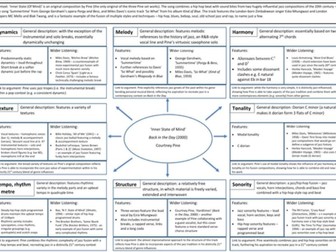
I create these ‘Element Maps’ for my A Level Music classes. They are essentially element-based mind maps, but they are catered to the 30-mark essay in Section C of the Edexcel A Level Music Listening & Appraising paper. I ask my students to structure their element paragraphs using the following template: a general description of the element in the set work two specific features of the element in the set work, linked to two relevant corresponding wider listening references a link to their argument The ‘Element Maps’ that I create are therefore structured like this, with a box for each of these aspects of a model paragraph for every element. I feel that this equips students comprehensively for Section C of the exam. Please note: this is not a resource with detailed analysis of the set work, the idea here is to strip back the detail found in the Edexcel notes and anthology to make it more manageable for students to prepare for the exam. The feedback from my students has been very positive so far, but I would welcome further feedback!