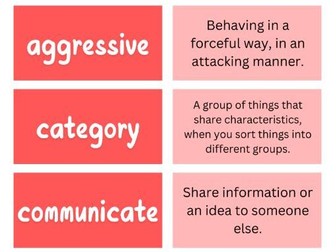
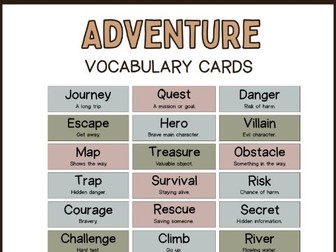
These are 11 cards with many different words appropriate for a range of genres. Each word has a very simple definition - they were made for my class who are mainly EAL. These cards will support students in writing stories, whilst boosting their vocabulary. They will also allow students to explore the different genres.
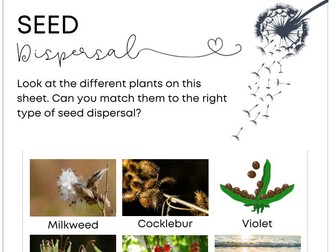
This PDF is a match the plant to the type of seed dispersal worksheet. One page has empty boxes, with explanations of animal, wind, water and explosion dispersal. Then another page has 12 plants. They will have to use clues from the picture, and their knowledge of dispersal to identify the right answers.
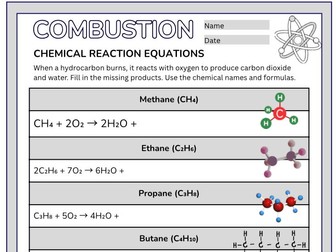
This worksheet is for students to complete chemical equations that link to combustion. There are different equations where a different fuel reacts with a certain amount of oxygen. They will see that this leads to water and then they will need to figure out how much carbon dioxide. I made it for my year 7 class but could be used for KS3.
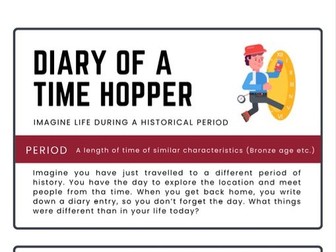
This is a pdf with 42 independent task cards aimed for KS2 students, to practice these skills from the curriculum: chronology; cause and consequences; change and continuity; similarity and difference; and significance.
The cards are open ended and can be used with any historical event or period of time. They link to other subjects, such as writing diaries and biographies or cooking and designing soundscapes.
Each card has a title, a lesson objective, a key word to define and a description of the task.
This is a 240 page pdf, with three civilisation cards (forest, river and cave). There are a mixture of resources (fish, fresh water, wood, lichen, rocks etc), materials (baskets, shelters, crowns, medicine) and situation cards (floods, miracles, droughts, revolution).
This activity was made for a residential trip where our secondary class (year 8 to year 10) went to a rural house for a few days. It could be used from year 5 onwards in a classroom setting.
Students must make a civilisation, using the resource cards to make materials and grow. There are links to PSHE, geography and history. There are instruction pages, but with this resource you have the ability to use it in a flexible way, depending on the needs of your lesson focus and your students.
My students were VERY engaged, talking about it for days afterwards.
This pack contains:
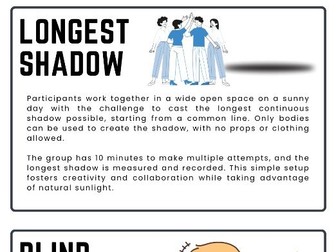
Eight cards with eight team building activities (including human puppet, where participants have to speak to an acting partner)
human puppet cards
document sharing how to use a compass, linking it to bearings and map scales
Three secret spy cards (for teams to complete before the other teams, as secret missions)
survival myth cards, along with ideas on how to prove or disprove them and a material list recommendation.
I made these for a residential trip for teenagers aged 12-15, but they could be used for younger.
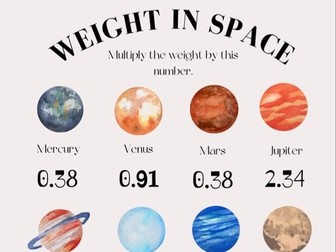
This is a three page PDF with a lesson set for KS2 children. The lesson could be adapted for Year 7. The first page is a lesson plan, stating the KS2 objectives in the science curriculum, as well as explaining the starter and main activity. it also has extra questions for those who need an extra challenge. The second page is a worksheet for recording their results and the third is a guide explaining how to calculate weight on different celestial bodies in our solar system.
This lesson was designed for a Montessori environment, but can be used in any traditional school setting. I originally gave this lesson to a small group but it is completely appropriate for a whole class setting.
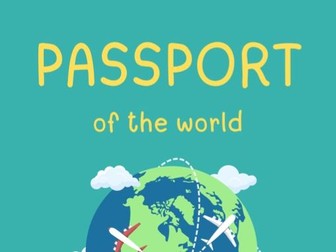
This resource contains a passport pdf, which could be used to track targets in any subject (for example, once you meet your target, you get a flag to stick in your passport to show you’ve traveled). Or it could be used for behaviour management - you get a flag when you show a positive behaviour in the class.
All flags are included so you can choose which flags to use. The children could research the flags or the countries around the world so they can choose where to travel to next. This also increases their locational knowledge around the world.
There are 3 documents:
A4 printable passport
The document in the order, for you to create an A5 document. You will need to print it 2 pages to a page, on both sides of the paper.
PDF of all of the flags as of 2024.
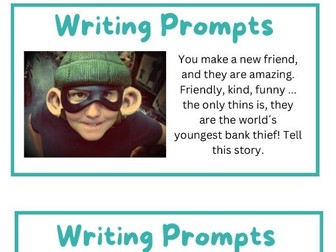
This PDF contains 50 writing prompt cards, to encourage creative writing in the class. They are designed for a KS2 Montessori British school, but can be used in any school setting, for children from primary to secondary. Students can be inspired to create their own stories, enabling them to practice many writing objectives in the curriculum. They could also be used for big write sessions or assessments.
These HF Vocabulary cards consist of 102 words with matching cards containing their definitions. The cards are colour coordinated, linked to the colours of the rainbow, so that children can focus on a few words at a time. These cards are for KS2, following the British curriculum, but are designed for a upper primary classroom in a British Montessori school in Spain. Definitions just contain one definition, but this could lead to discussions with the children about how some words have more than one definition. Cards are clear and easy to read and use. I will use these cards for assessments, to ensure the children are able to read all of the words, in a manner with less pressure.
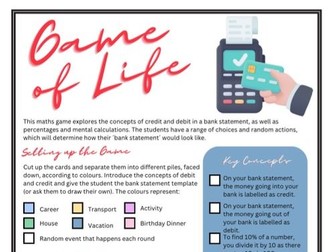
This resource encourages KS2-KS4 students to understand bank statements, regarding credit and debit. This document contains instructions to the game, with key concepts explained. It contains a template for children to create their own simplified bank statement, and then also cards for the students to play the game. In the game, they are given careers and have to choose houses, transport, vacations etc whilst managing real life situations such as being paid a wage, paying taxes and bills and paying for birthday celebrations. The main purpose is to understand debit and credit and the template matches the bank statements typically found in exam papers. Other skills that it works through is adding and subtracting numbers larger than 1000, as well as finding percentages of amounts (in multiples of 10). I have used this game with year 5, year 6, year 7, year 9 and year 10 students, who are mainly EAL. They found it very enjoyable, and with the cards being very visual, its an appropriate game for those less confident in reading.
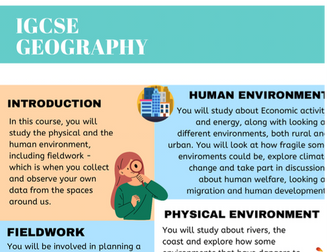
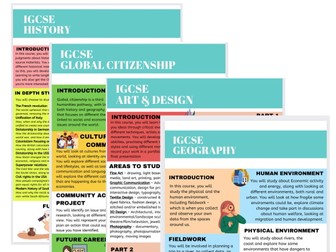
This pdf contains a poster with information related to the Pearson Edexcel IGCSE course of Geography. I do not work for Pearson Edexcel - this was made independently for my students in KS3, year 9, to help them understand the different courses in a clearer way. The document contains specifics about the course, relevant careers related to the course and what they will get from it.
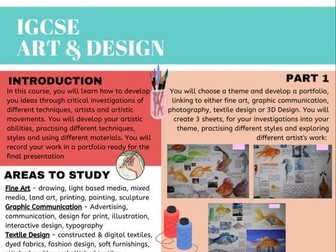
This pdf contains a poster with information related to the Pearson Edexcel IGCSE course of Art & Design. I do not work for Pearson Edexcel - this was made independently for my students in KS3, year 9, to help them understand the different courses in a clearer way. The document contains specifics about the course, relevant careers related to the course and what they will get from it.
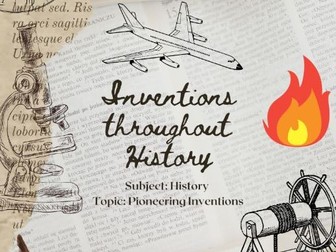
This PDF contains an historical project for secondary students to explore the impact of key developments throughout human history. It contains a justification for the project, along with many tasks that the student can complete, in order to do this project in a way that supports their interests. It was created for a Secondary Montessori environment, but can be used in any educational setting, and for students aged from 9 to 14.
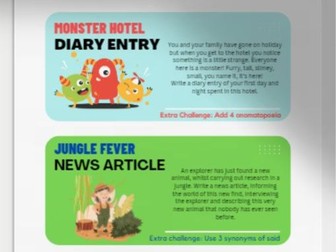
This PDF contains 15 KS2/KS3 writing cards, which include prompts for writing different text types, from narratives to biographies, instructions and reports. The cards can be used for KS2 and early KS3, as they were designed originally for a class of year 5,6 and 7 students. Each card has links to grammar objectives in the year 5/6 British Curriculum, with extra challenges on each prompt to consider objectives such as relative clauses, figurative language and writing speech correctly. This document was used in a Montessori environment, to encourage students to practise a range of text types, but can be used in any English setting, or for Big Writes.
This PDF, aimed for secondary class, encourages tolerance of different faiths and beliefs, especially around Christmas time. It contains a justification for the project, along with different tasks they can do to explore different festivities from different religions. It was created for a Secondary Montessori setting, but can be used in any kind of class setting, from age 9 to 14. The different tasks support the interests of the students, as well as building autonomous learning. There is an evaluation section, as well as a reminder to reference any research that they do.
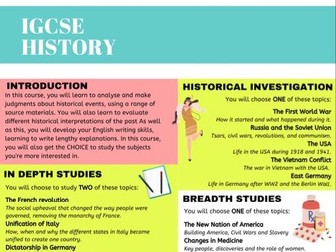
This pdf contains a poster with information related to the Pearson Edexcel IGCSE course of history. I do not work for Pearson Edexcel - this was made independently for my students in KS3, year 9, to help them understand the different courses in a clearer way. The document contains specifics about the course, relevant careers related to the course and what they will get from it.
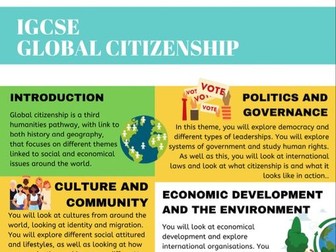
This pdf contains a poster with information related to the Pearson Edexcel IGCSE course of Global Citizenship. I do not work for Pearson Edexcel - this was made independently for my students in KS3, year 9, to help them understand the different courses in a clearer way. The document contains specifics about the course, relevant careers related to the course and what they will get from it.
These posters are to inform students about the courses provided in the IGCSE Pearson Edexcel exams. I do not work for Pearson Edexcel, and have created these myself, to inform my students at school.
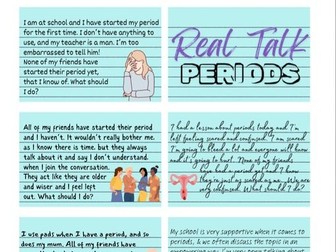
This pdf contains 23 cards with common worries about periods. The purpose is to support discussion around menstruation, allowing students to talk through some worries they may have and clear up any misconceptions. The last page has blank cards, to allow for students to create their own.
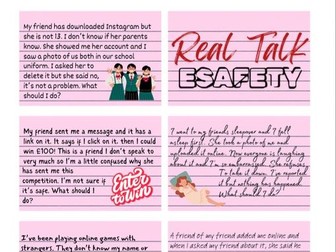
This pdf contains 23 cards with common worries about esafety. The purpose is to support discussion around the safe use of online platforms and cyber bullying, allowing students to talk through some worries they may have and clear up any misconceptions. The last page has blank cards, to allow for students to create their own.


 Quick View