Celebrate love with this beautiful 100-page Wedding Colouring Book, perfect for both adults and kids. Filled with romantic bride & groom scenes, floral bouquets, wedding cakes, rings, and reception moments, these pages make a wonderful activity for bridal showers, engagement parties, and wedding receptions. Simply download, print, and start colouring at home – no shipping, no waiting. Ideal for stress relief, family fun, and DIY wedding entertainment, this popular digital colouring bundle is ready to enjoy instantly as a high-quality PDF.
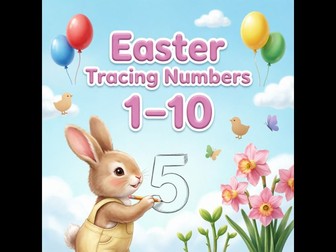
Celebrate Easter while helping little learners practice number formation with this adorable Easter Tracing Numbers 1–10 pack. This 50-page PDF printable includes fun, themed tracing pages with bunnies, eggs, and spring designs to keep kids engaged as they strengthen fine motor skills and number recognition. Perfect for preschool, pre-K, kindergarten, homeschool, or classroom use. Simply download, print, and start tracing for a low-prep, educational Easter activity.
In today’s digital age, social networks have become an integral part of our daily lives, offering unprecedented opportunities for communication, information sharing, and social interactions (Kim and Kim, 2017). However, these platforms also gather a large number of users interacting through comments, chat messages, and emails, leading to widespread expression of opinions. The language used in these communications can significantly affect the interpretation of the messages are interpreted (Humphreys, 2018). When language promotes harmful behavior, it is considered toxic. This research investigates the contextual analysis of toxic language in social networks, with a focus on its relationship with mental health discussions and the triggers, contexts, and patterns that influence such communication, including adverse online interactions, creating hostile online environments that can severely impact mental well-being (Sheth et al., 2022). Toxic language in social networks can serve as a significant stressor that negatively affects mental health, with contextual factors (such as topic and relational dynamics) playing a crucial role in determining its harmful effects. The global growth of social networking sites has spread cyberbullying and online disinformation worldwide (Saif et al., 2023). These platforms allow users to create and promote user-generated content, thereby distinguishing them from other media (Tyrväinen et al., 2023). However, the brevity and lack of context in social media posts often lead to misinterpretation and toxic exchanges. The growing reliance on social media for communication has exacerbated the prevalence of negative online interactions, posing significant risks to the safety and well-being of vulnerable individuals (Valkenburg et al., 2022).
– The purpose of this paper is to evaluate the impact of knowledge and understanding framework (KUF) awareness-level training with mental health staff in a UK NHS Mental Health Trust.
Design/methodology/approach
– In total, 181 mental health professionals completed three day KUF awareness-level training to promote understanding and positive attitudes in working with personality disorder (PD). Attitudes to PD were evaluated using the PD – Knowledge and Skills Questionnaire (Bolton et al., 2010) at pre and post training and at three and six months follow up. Quantitative data were analysed and descriptive statistics were obtained. Qualitative methods were also used to evaluate the integration of learning into work-based practice with five participants.
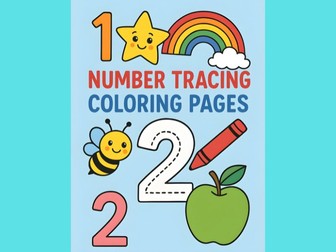
Help your child master number recognition and writing skills with this comprehensive collection of 29 engaging number tracing and coloring pages. Each worksheet combines learning with fun, featuring bold, easy-to-trace numbers alongside delightful coloring activities. Perfect for preschoolers, kindergarteners, and early learners developing fine motor skills and number recognition. These printable pages provide hours of educational entertainment while building essential math foundations. Ideal for homeschooling, classroom activities, or quiet time at home.
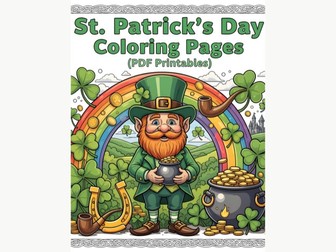
Celebrate the luck of the Irish with this collection of 31 St. Patrick’s Day coloring pages! This printable PDF set features festive designs including leprechauns, shamrocks, pots of gold, rainbows, and other lucky symbols perfect for kids and adults. Great for classrooms, holiday activities, parties, or relaxing creative time at home. Simply download, print, and enjoy hours of St. Patrick’s Day coloring fun.
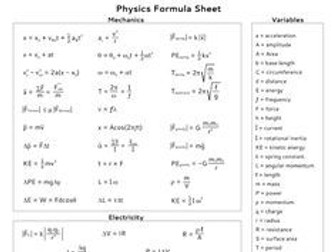
Master the 2026 AP® Physics 1: Algebra-Based exam with a clearly labeled equation sheet, units and vectors review tools, and organized MCQ practice tests plus past FRQs by topic and year, aligned with the official exam reference information and format.
Physics Study Guides
I have prepared a set of very complete solutions to physics problems taken from popular textbooks for calculus-based physics. They are all in PDF format.
This is an ongoing project; some chapters are missing some important material. Much work remains to be done…
“Chapter 0” for each volume just contains the cover, table of contents and introduction, for completeness. (The date on the cover serves as an edition number.) The other chapters have substance. Or so I claim.
1/08: Additions to Second-Semester Algebra based book.
Volume 1: Kinematics and Dynamics
Chapter 0
Chapter 1 Units and Vectors
Chapter 2 Motion in One Dimension
Chapter 3 Motion in Two and Three Dimensions
Chapter 4 Forces I
Chapter 5 Forces II
Chapter 6 Work & Energy
Chapter 7 Linear Momentum and Collisions
One-dimensional system analysis codes such as RELAP5, TRACE, CATHARE-3, and SPACE are generally used to address nuclear safety issues with an umbrella of conservativeness. The three-dimensional (3-D) approach for 3-D components like reactor vessels, however, is always of concern in nuclear safety analysis.
A simplified 3-D approach by which the “cross-flow junctions” between 1-D modules represented some multi-dimensional flow features, was first developed in system codes like RELAP (The RELAP5-3-D Code Development Team, 2001) and ATHLET (Burell et al., 1989). This may be sufficient in some cases particularly for a porous body like a reactor core when only small cross flows exist due to high resistance to transverse velocity. Explicit 3-D modules exist as an option in the codes TRACE (Bajorek et al., 2015) and CATHARE-3 (Barre and Bernard, 1990) for the reactor pressure vessel. In this case, the main objective is the modelling of large scale 3-D effects in a pressure vessel during Large Break Loss of Coolant Accidents (LBLOCAs) such as ECCS water reflooding of the core with transverse power profile effects. The 3-D modules are straight forward extensions of the 1-D modules for cylindrical or Cartesian coordinates. A multiscale software platform, including a CFD module and CATHARE-3 as a system code, were developed to model reactor pressure vessels effectively. Development of a 3-D reactor core module using 1000 or fewer cells was also started using SPACE code (Ha et al., 2010).
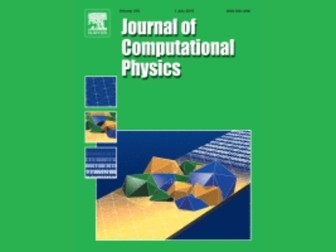
The Particle-in-Cell (PIC) method [1] is a popular method for solving the Vlasov–Poisson equations for a class of problems in plasma physics, astrophysics, and particle accelerators, for which electrostatic approximation applies, as well as for solving the gravitational problem in cosmology and astrophysics. In such a hybrid particle–mesh method, the distribution function is approximated using particles and the Poisson problem is solved on a rectangular mesh. Charges (or masses) of particles are interpolated onto the mesh, and the Poisson problem is discretized using finite differences or spectral approximations. On simple rectangular domains, FFT methods are most commonly used for solving the Poisson problem. In the presence of irregular boundaries, finite difference approximations are often used, complemented by a cut-cell (a.k.a. embedded boundary) method [2] for computational cells near boundaries, and fast linear solvers (including multigrid iterations) for the corresponding linear system. The computed force (gradient of the potential) on the mesh is then interpolated back to the location of particles. For problems with irregular geometry, unstructured grid with finite element method is often used.
Each year, millions of students across the country take high-stakes achievement tests that will have an important influence on their academic and professional futures (Heubert & Hauser, 1999); yet, many of these tests are not aligned with modern theories of student learning and cognitive processing. As a result, students with strengths in cognitive skills not assessed by these tests may have their future opportunities curtailed (Sternberg, 1997). Indeed, many tests that serve as gatekeepers tend to emphasize only a limited range of skills (e.g., analytical and memory skills). Yet analytical and memory skills alone are not sufficient to succeed in the professional world. For example, although analytical skills are important to the physicist, who must compare and contrast competing explanations for phenomena and critically analyze data, other skills are important as well. It takes creative skills for the physicist to synthesize disparate findings and generate new theories, and practical skills to understand how theoretical findings may be used in the real world (e.g., to improve communication technology) as well as to persuade others of the value of the findings. To the extent that selection tests are weighted more heavily in favor of one particular type of skill, an entire professional field may suffer because it potentially will be dominated by individuals with a single profile of strengths and weaknesses, thereby inhibiting the capacity of the field to develop to its full potential. A balance of cognitive skills is important, regardless of one’s professional domain. Thus, measurements should assess a broad profile of skills in students.
The aim of the current research was to examine the impact on student achievement of creating a set of modified, theory-driven examinations that expanded the range of cognitive skills assessed. The College Board’s Advanced Placement (AP) program in Physics was used as a testing ground for the project.
The College Board’s Advanced Placement (AP) Program, initiated in 1955, was originally designed as a mechanism for granting exceptional high school students an opportunity for advanced study that would be equivalent to college-level programming. When this program began, it served only top students from a limited number of high schools, but in 2006, 666,067 graduating seniors (24% of all graduating seniors) at 16,000 secondary schools reported having taken at least one exam in one of the 37 courses across 22 subject areas offered by the AP program (College Board, 2007).1
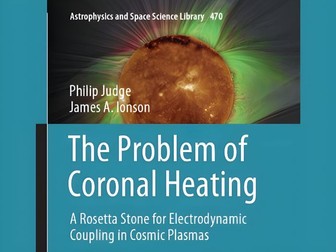
This book reflects on 8 decades of research on one of the longest-standing unsolved problems in modern astrophysics: why does the Sun form a hot corona? The authors give a critical overview of the field and offer suggestions on how to bridge the chasm between what we can measure, and what we can calculate. They go back to basics to explain why the problem is difficult, where we have made progress and where we have not, to help the next generation of scientists devise novel techniques to crack such a long-lasting problem. A way forward is formulated centered around refutation, using Bayesian methods to propose and to try to reject hypotheses and models, and avoiding seduction by ``confirmation bias’’.
This book is aimed at physicists, students and researchers interested in understanding, learning from and solving the coronal heating problem, in an era of new dedicated facilities such as the Parker Solar Probe and the Daniel K. Inouye Solar Telescope.
Thebook will appeal to those interested in understanding research methods and how they are changing in the modern academic environment, particular in astrophysics and Earth sciences where remote sensing is essential.
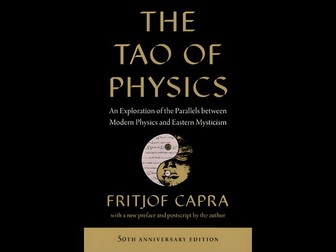
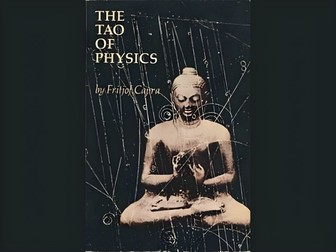
An updated 50th anniversary edition of the bestselling classic on the extraordinary relationship between modern physics and Eastern philosophy.
Fritjof Capra brought the mystical implications of subatomic physics to popular consciousness for the very first time back in 1975. Many books have been written in the ensuing years about the connections between quantum theory and the ideas of Buddhism, Hinduism, and Taoism, but The Tao of Physics serves as the foundation on which the others have been built, and its wisdom has stood the test of time. Its publication in over twenty languages stands as testimony to its universal applicability and enduring significance. This special edition celebrates the fiftieth anniversary of the perennial classic and includes new material by the author—a preface, an updated afterword, and a postscript—reflecting on further discoveries and developments in the years since the book’s initial publication.
An exploration of Fritjof Capra’s groundbreaking book The Tao of Physics, which reveals surprising parallels between modern physics and Eastern philosophical traditions such as Taoism, Buddhism, and Hinduism. Capra examines how concepts from quantum mechanics and relativity echo ancient insights about the interconnected and dynamic nature of reality, inviting readers to rethink the relationship between science, spirituality, and the universe.
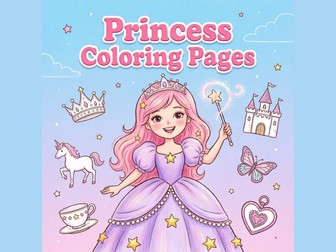
Enjoy 30 beautiful princess coloring pages designed for kids who love royal adventures, castles, crowns, and magical dresses. These fun and easy illustrations help spark creativity, improve focus, and provide relaxing screen‑free entertainment. Perfect for home, classrooms, travel activities, or gifts for young artists who enjoy fairy tales and princess stories.
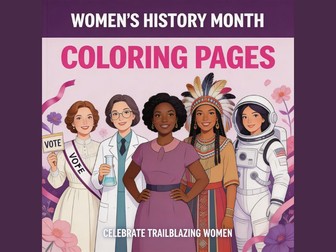
Celebrate Women’s History Month with this collection of 30 inspiring coloring pages featuring influential women and empowering themes. Perfect for kids, classrooms, and adults, these printable pages encourage creativity while honoring the achievements, strength, and impact of women throughout history. Great for educational activities, homeschooling, and relaxing art time.
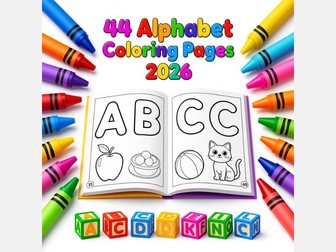
Enjoy this 44 Alphabet Coloring Pages 2026 PDF Printable, perfect for kids, preschoolers, and kindergarten learners. These fun and educational coloring pages help children practice letter recognition, improve fine motor skills, and enjoy creative learning at home or in the classroom. Easy to print and great for alphabet activities, homeschooling, and early education.
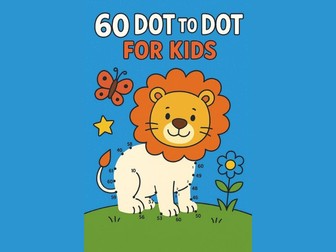
Keep kids entertained and learning with this fun 60 Dot-to-Dot printable activity book! Designed for young learners, this PDF includes 60 engaging connect-the-dots puzzles that help children practice number recognition, counting skills, focus, and fine motor development. Each puzzle reveals a cute surprise picture once completed, making learning both exciting and rewarding. Perfect for home activities, classrooms, road trips, or quiet time. Simply download, print, and start connecting the dots!
Enjoy the spirit of Ramadan with this collection of 50 beautiful Ramadan coloring pages. Featuring mosques, lanterns, crescent moons, stars, prayer scenes, and festive Islamic patterns, this coloring book is perfect for kids and adults who want a relaxing and creative way to celebrate the holy month. Ideal for home, school activities, Ramadan gifts, and family bonding time.
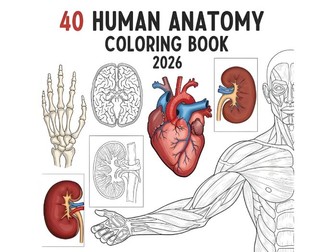
Explore the wonders of the human body with this 40-page Human Anatomy Coloring Book 2026, designed as an in-depth visual guide to human biology and physiology. Perfect for students, homeschoolers, educators, and lifelong learners, this printable PDF makes anatomy study more engaging, interactive, and easy to understand.
Celebrate creativity and patriotism with this collection of 45 Freedom Coloring Pages 2026 in PDF printable format. Perfect for kids, teens, and adults, these patriotic coloring sheets feature freedom-inspired designs that are great for Independence Day activities, classroom use, homeschool projects, party fun, and relaxing creative time at home. Instantly download, print, and enjoy meaningful coloring pages that honor liberty, pride, and American spirit.
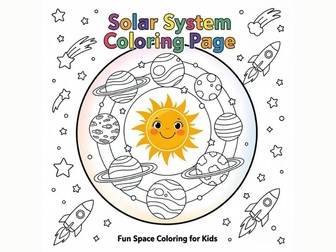
Explore the wonders of space with this collection of 30 solar system coloring pages! Featuring planets, astronauts, rockets, stars, and fun space scenes, these printable pages are perfect for kids, students, and space lovers. Great for learning about the solar system while enjoying a relaxing and creative activity at home, in classrooms, or during science lessons.


 Quick View