


Lesson overview
This lesson helps students understand their connection to the ocean through its many benefits, or what scientists call “ecosystem services.” These are the benefits that nature provides to people, from necessities like food and clean air, to jobs and places for recreation. While young students won’t use technical terms like “ecosystem services,” understanding that nature provides these “gifts” helps build early environmental literacy.
For teachers unfamiliar with this concept, ecosystem services are typically grouped into:
- Providing services (food, materials)
- Regulating services (clean air, fresh water)
- Cultural services (recreation, well-being)
- Supporting services (nutrient cycling, habitats)
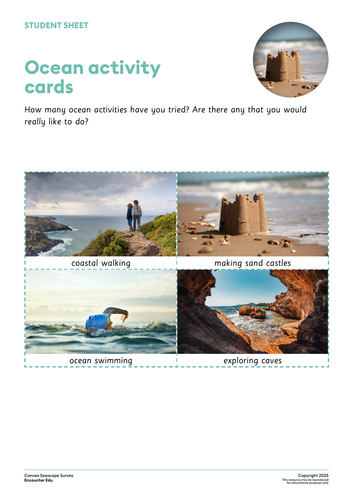
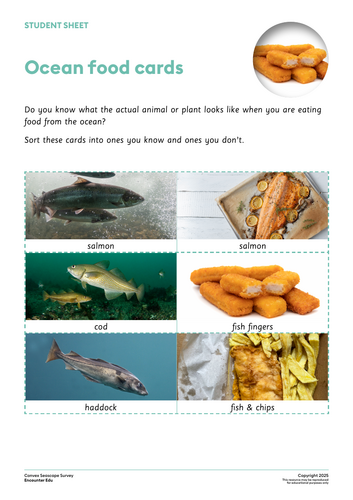
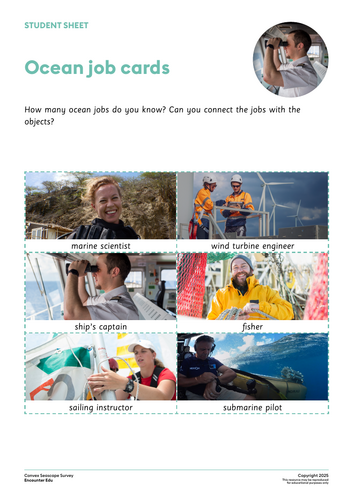
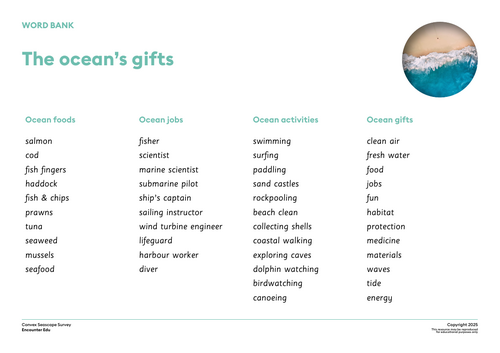
This lesson focuses on the most tangible of these “gifts” for young learners - food from the sea, ocean-related jobs, and fun at the beach. Through sensory experiences and creative activities, students discover how the ocean enriches our lives, laying the groundwork for understanding why ocean care matters.
Learning outcomes
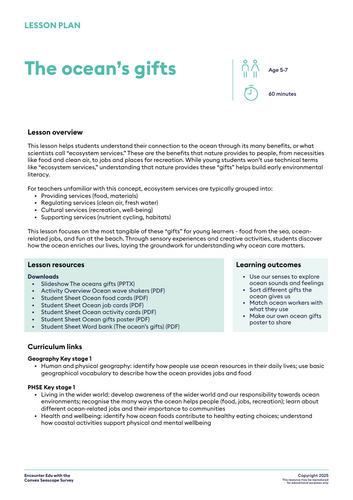
- Use our senses to explore ocean sounds and feelings
- Sort different gifts the ocean gives us
- Match ocean workers with what they use
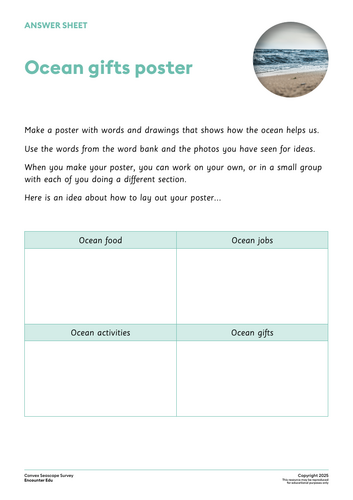
- Make our own ocean gifts poster to share
Climate change and sustainability
As part of the strategy to embed climate and sustainability learning throughout primary school, this lesson has been designed to develop pro-environmental values and build the foundational knowledge needed to address climate and conservation topics more fully in later years.
Values integration
- Appreciation for ocean benefits
- Respect for ocean workers
- Understanding human-ocean connection
- Care for ocean environments
- Climate change links
Understanding these ocean “gifts” helps students begin to see how climate change might affect both nature and people. For example:
- When oceans warm, fish might move to find cooler waters, affecting fishing communities
- Rising seas can change or damage beaches where people work and play
- Changes in ocean temperature can affect marine plants that help make our air clean
- Storms and flooding can affect coastal jobs and activities
This early understanding that people rely on healthy oceans creates a foundation for learning about climate impacts and solutions in later years. When students grasp that the ocean provides many benefits we depend on, they can better understand why protecting ocean health matters for everyone - from marine animals to coastal communities. This helps build environmental literacy and prepares them for more complex discussions about sustainability, climate adaptation, and nature conservation as they progress through school.
Something went wrong, please try again later.
This resource hasn't been reviewed yet
To ensure quality for our reviews, only customers who have downloaded this resource can review it
Report this resourceto let us know if it violates our terms and conditions.
Our customer service team will review your report and will be in touch.
£0.00