Bundle
 Quick View
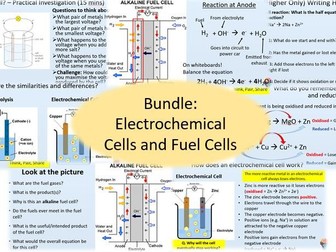
Electrochemical Cells and Fuel Cells Bundle
This bundle contains the lessons, powerpoints and all relevant resources for teaching the Separate Science GCSE Chemistry AQA content on electrochemical cells and fuel cells.
This bundle contains 3-4 lessons of content including:
Lesson 1: What are Electrochemical Cells?
Lesson Objectives:
Describe what an electrochemical cell is and what we use it for
Describe how to make an electrochemical cell
Identify factors which affect the size of the voltage produced by an electrochemical cell
This lesson contains:
Lesson powerpoint
Student practical investigation
Teacher notes on how to deliver lesson slides/content and answers
Lesson 2: How do Electrochemical Cells Work?
Lesson Objectives:
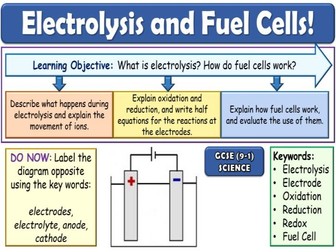
Recall the definitions for oxidation and reduction
Identify which elements are oxidised and reduced in an electrochemical cell
(H) – write half equations for oxidation and reduction taking place in electrochemical cells
Explain why alkaline/non-rechargeable batteries eventually stop working
This lesson contains:
Lesson powerpoint, containing animation about how electrochemical cells produce electrical current and the reactions that take place within it
Student exam questions (23 marks worth) from AQA syllabus with mark scheme
Teacher notes on how to deliver lesson slides/content and answers
Lesson 3/4: What are Fuel Cells?
Lesson Objectives:
Describe, in basic terms, how a hydrogen fuel works
(Higher only) write balanced half equations for the reactions taking place inside a hydrogen fuel cell
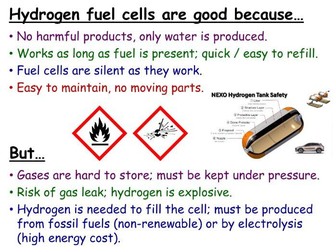
Describe advantages and disadvantages of hydrogen fuel cells
Evaluate the use of hydrogen fuel vehicles compared to electric and petrol vehicles
Lesson resources include:
Lesson powerpoint with printable diagrams for students
Explanations of half equations from fuel cell (both acid cell (not AQA) and alkaline cell (AQA) version) and balancing them
Relevant video links
6 marker question and mark scheme
Exam question pack on fuel cells and energy
Plenary AFL multiple choice quiz and debate activity