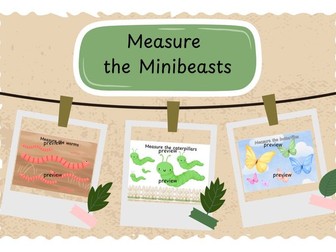
In this activity children will measure the minibeasts.
This resource includes:
Three minibeasts to measure:
Worms in soil
-Caterpillars
-Butterflies in the sky
Measuring vocabulary discs
This resource supports:
Measuring Vocabulary
Comparing lengths
Using non-standard measure
Fine motor
Hand-eye coordination
Develop understanding of the world
Problem solving skills
Spatial awareness
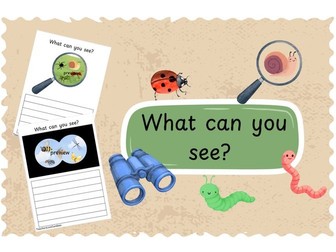
In this activity children will have a choice of four common places minibeasts are found. They will write a list of what minibeasts they can see.
This activity includes:
Four what can you see? sheets
Enhancements
This activity supports:
scientific observation
early awareness of animal habitats
minibeast vocabulary
letter formation
applying phonics learning
increasing vocabulary
experimenting with spelling
sentence formation
This A4 colourful chart is designed to enable children (from age 5 upwards) and beginners to identify the invertebrates commonly found in a garden or outdoor space.
The simple flow chart on this guide shows representatives of the main groups found in a garden or outdoor space. These include animals with no legs, such as snails, slugs, earthworms, roundworms, insect and larvae. Plus the animals with jointed legs, such as crustaceans, insects, spiders and mites.
The most simple ID key I’ve ever come across!
Who lives where? Garden microhabitat activity
An activity where children arrange minibeasts into the garden micro-habitats they would live in.
This resource includes:
A3 printable garden (with and without microhabitat labels)
A4 printable garden (with and without microhabitat labels)
12 common minibeasts to place in the garden
Minibeast ID sheet
Guidance notes on how the resource could be used, including follow up questions to explore together.
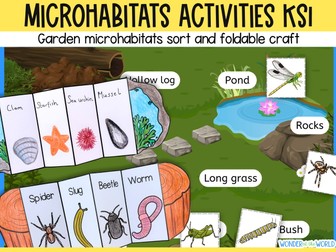
Microhabitat foldable craft
A fun craft activity for younger pupils, designed to get them thinking about microhabitats and the animals that live there.
This resource is a 10 page PDF. It looks at 4 microhabitats; a rockpool, under leaves, under a log and a flower bed. There are 2 templates for each microhabitat so they can either colour the animals already included or research and draw their own. Print on A4 paper or card.
Once they have coloured a template, children can cut it out and fold using the instructions provided. Some children may need assistance with this part and it’s a good idea to have a pre-made example.
Once folded, they can then ‘hide’ the animals away by closing the template, and then pull it gently apart to reveal what’s inside.
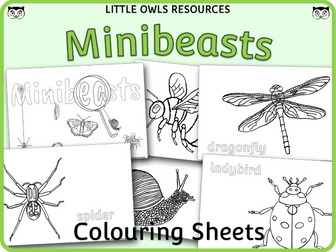
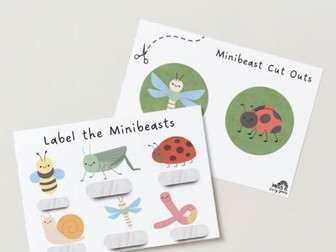
Pack of 15 ‘Minibeast’ themed colouring sheets. Includes 11 individual minibeast creature sheets with name labels.
‘Minibeasts’ poster
Bee
Butterfly
Caterpillar
Ladybird
Ant
Snail
Spider
Fly
Dragonfly
Woodlouse
Centipede
Earwig
Garden scene 1
Garden scene 2
Have fun!
Two pages with mini beast / insect themed pictures to color in and write the corresponding word - all easy to decode. Perfect for practicing early phonics and writing skills.
Factsheet about minibeasts! Wasps, dragonflies, honey bees, flies, moths, butterflies, aphids, snails, woodlice, spiders, grasshoppers, centipedes. Bring the outdoors into your classroom with this inspiring activity from the Woodland Trust's nature detectives website.
A six week unit of work linked to questions. Questions attached so you can enlarge and display in the classroom. Activities and outcomes included. Lots of exciting ways to engage children in a Minibeast topic.
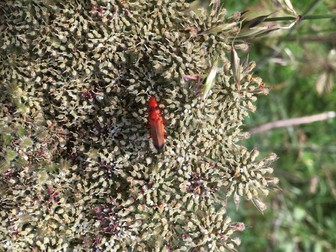
A small collection of minibeast photos that I put together for my class as part of our module on minibeasts, ecosystem, life cycle, and habitats.
Please leave me a review and I will send you any other resource of your choice for free (contact me: office@oceansproject.com). Check out my other resources at my shop: https://www.tes.com/teaching-resources/shop/sarah277
Let me know if you have any resource requests and I will tailor make a resource for you.
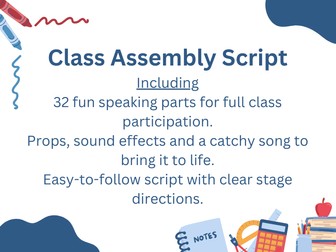
Transport your students into the world of science with our Minibeasts Class Assembly Script! This engaging assembly pack features 32 speaking parts, making it ideal for the whole class to get involved in a fun, educational performance.
Benefits:
32 Speaking Parts: Every student gets a role to play, ensuring full participation and engagement.
Easy to Perform: Clear stage directions and simple dialogue make it easy for teachers and students alike to prepare.
Creative Add-ons: Includes prop ideas and a catchy song to enhance the performance and make it even more memorable.
Educational & Fun: Students will learn key facts about minibeasts while developing confidence and teamwork through performance.
**Sample Excerpt:
Scene 1: The Wonderful World of Minibeasts**
(Children 3 to 8 step forward, each holding a prop or wearing a costume representing a different minibeast—bee, ladybird, caterpillar, butterfly, snail, and spider. The rest of the class can pretend to crawl, fly, or move like the animals they represent.)
Child 3 (wearing a bee headband or holding a bee prop):
I’m a bee! I buzz around flowers, collecting pollen to make honey. Bees help plants grow by spreading pollen everywhere.
Child 4 (wearing a ladybird headband or holding a ladybird prop):
I’m a ladybird! I eat aphids, which helps keep plants healthy.
Child 5 (wearing a caterpillar costume or holding a caterpillar prop):
I’m a caterpillar! I munch on leaves, and soon I will turn into a beautiful butterfly!
Child 6 (wearing a butterfly costume or holding a butterfly prop):
I’m a butterfly! I help pollinate flowers, just like my friend the bee.
Child 7 (holding a snail shell or wearing a snail costume):
I’m a snail! I move slowly and leave a shiny trail behind me. I like to munch on leaves and plants.
Child 8 (wearing a spider costume or holding a toy spider):
I’m a spider! I spin webs to catch insects, and I keep things clean by eating pests.
(The children can pretend to buzz, crawl, or flutter as they speak, showing the different minibeasts in action.)
Perfect for school events, this script makes learning about the past an exciting adventure!
This unit looks at minibeasts and may be useful either prior to embarking on work of a practical nature or after a practical session collecting and observing bugs. This activity should not replace the practical task of collecting bugs. The thrill pupils have in first hand observations of live creatures cannot be replicated on a whiteboard screen.
Using the resources in this pack, pupils will learn about:
* different kinds of animals in the local environment
* that animals can be grouped according to observable similarities and differences
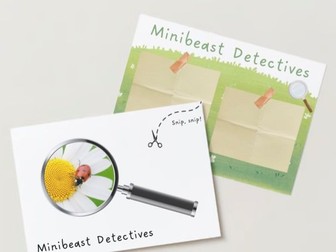
Minibeast Detective Activity Pack
12 different magnifying glasses to be cut out
Pair with the writing mat for children to write what they can see
Table sign
Flower cut outs
 Quick View

 Quick View
 Quick View
 Quick View
 Quick View
 Quick View
 Quick View
 Quick View
 Quick View
 Quick View
 Quick View
 Quick View