Mountain Environments - KS2Quick View
TeachItForward

Mountain Environments - KS2

8 Resources
Mountain Environments is a Geography unit suitable for KS2 (Y4-6) and has everything you need for covering a mountains topic. The planning overview, topic title page and vocabulary page can be downloaded for free here. Lessons include: L1 – Identifying the key features of mountains L2 – Identifying the world’s major mountain ranges L3 – Locating the world’s famous mountains using latitude and longitude L4 – Understanding how fold mountains are formed L5 – Investigating the structure of a volcano (FREE) L6 – Researching famous world mountains (FREE) L7 – Investigating mountain climates Each lesson includes a presentation and differentiated activities/worksheets. If you like this resource, we would appreciate a review! We will happily send you a free resource in return for a review or useful suggestions/feedback. Contact us at ed@teachitforward.co.uk.
Comparing Mountain ClimatesQuick View
katiecornwell

Comparing Mountain Climates

(0)
This is a Geography lesson involved in a ‘Mountain’ topic unit where children will be comparing the climate of two mountains: Mount Everest and Mount Snowdon. It involves the presentation and resources.
Investigating mountain climates - KS2Quick View
TeachItForward

Investigating mountain climates - KS2

(3)
This lesson is part of Mountain Environments, a Geography unit designed for students in upper KS2 (Y4-6). First the presentation looks at features of a mountain climate including lower temperatures and increased rainfall. It then focuses in more detail on the climate of Mount Everest. There are two activities: Interpreting climate graphs In this activity students look at and answer questions about temperature graphs for both the summit and base camp of Mount Everest. It is differentiated two ways: Easier – Students answer questions about temperature graphs for Mount Everest (suitable for Year 4 and 5). Harder – Students answer questions about temperature graphs for Mount Everest (suitable for Year 6). Creating a climate graph in Excel In this ICT activity, students create their own climate graph, including temperature and rainfall, for the summit of Mount Everest using Microsoft Excel. If you like this resource, we would appreciate a review! We will happily send you a free resource in return for a review or useful suggestions/feedback. Contact us at ed@teachitforward.co.uk.
Mountains of Europe Geography Lesson KS2Quick View
Teachallenjoy

Mountains of Europe Geography Lesson KS2

(1)
A complete geography lesson on the mountains of Europe. Includes a thorough teaching PowerPoint, interactive activities, worksheets, video, extensions and games. Follow the ready-to-go PowerPoint to teach about the mountain ranges of Europe. Cover: Formation Map work Climate Vegetation Facts Famous peaks Planned for years 3 or 4, easily adaptable for years 5 and 6. Differentiated recording tasks provided with two extensions. Highlights: Photo analysis starter activity Activities for all styles of learners Scaffolded learning Check out my other popular Geography lessons on Europe: Where is Europe? lesson pack Countries of Europe lesson pack Compare Cities of Europe lesson pack Climate of Europe lesson pack Rivers of Europe lesson pack
Identifying the key features of mountains - KS2Quick View
TeachItForward

Identifying the key features of mountains - KS2

(3)
This is the first lesson in Mountain Environments, a Geography unit designed for students in upper KS2 (Y4-6). First the presentation introduces students to the topic and looks at some of the activities people do in mountains. It then introduces the key features of a mountain range. The activity challenges students to identify the key features of a mountain environment. It is differentiated three ways: Easier – Students identify 8 key features of mountains. Medium – Students identify 10 key features of mountains. Harder – Students label the key features of mountains in their exercise book. Extension – Students match mountain vocabulary to their definitions. If you like this resource, we would appreciate a review! We will happily send you a free resource in return for a review or useful suggestions/feedback. Contact us at ed@teachitforward.co.uk.
Story mountain template Quick View
ljj290488

Story mountain template

(0)
Basic story mountain planning template. A very effective resource to gather and organise fiction writing/narrative writing ideas.
Identifying the world's major mountain ranges - KS2Quick View
TeachItForward

Identifying the world's major mountain ranges - KS2

(3)
This lesson is part of Mountain Environments, a Geography unit designed for students in upper KS2 (Y4-6). First the presentation introduces some of the most famous mountain ranges from around the world. The differentiated activity then challenges students to locate the world’s mountain ranges and encourages them to use and explore atlases. It is recommended that students do the activity in pairs. Easier – Students identify the world’s famous mountain ranges (less writing). Medium – Students identify the world’s famous mountain ranges (first letter clues) Harder – Students identify the world’s famous mountain ranges (no clues) If you like this resource, we would appreciate a review! We will happily send you a free resource in return for a review or useful suggestions/feedback. Contact us at ed@teachitforward.co.uk.
Year 3 Reading Comprehension - What is a Mountain?Quick View
PeannJan

Year 3 Reading Comprehension - What is a Mountain?

(0)
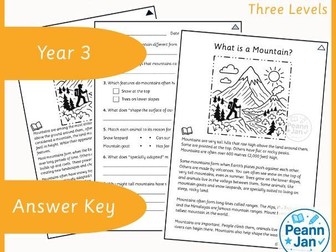
What rises above the land, reaches into the clouds, and shapes our world? Mountains! This Peann Jan reading comprehension pack introduces learners to one of Earth’s most dramatic landforms. With three carefully differentiated texts (Starter, Standard, Stretch), readers build confidence as they move from early reading skills like retrieval and matching to deeper thinking tasks including inference, vocabulary reasoning, and author’s intent. Across all levels, pupils explore how mountains form, what features they share, and why they matter. They learn that mountains are usually over 600 metres (2,000 feet) high, can be made by tectonic plates or volcanoes, and often appear in long ranges like the Alps, the Rockies, or the Himalayas. From snow-capped peaks to forested slopes and deep valleys, the texts highlight how these mighty landscapes support wildlife, influence weather, and provide water to millions. What’s included: Three black-and-white reading texts (Starter, Standard, Stretch) Matching question sets designed to support skill progression Answer keys with clear skill tags Built-in traffic light self-assessment system with child-friendly icons Climb higher with this high-interest, geography-inspired comprehension resource! © Peann Jan 2025 – For classroom use only
Story Writing Plan - Story MountainQuick View
nayanmaya

Story Writing Plan - Story Mountain

(2)
Helpsheet for children planning a story. Ideas for what to write about in the opening, build-up, problem, resolution and conclusion. This story mountain can be used to guide children through the planning phase and make improvements to their story writing skills.
Mountains display packQuick View
highwaystar

Mountains display pack

(0)
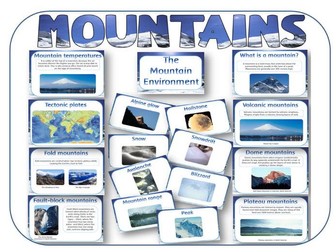
This resource contains headings, vocabulary and posters, all in pdf format on CD to print out for a Mountains display MOUNTAINS LETTERING - This lettering is to cut out for display. 'MOUNTAINS' / 'THE MOUNTAIN ENVIRONMENT' is written out, which can either be printed as a banner, or cut out for display. There are also all upper and lower case letters and numbers included so that you can print out whatever you need to personalise your display. THE MOUNTAIN ENVIRONMENT A4 HEADER - to print. MOUNTAINS VOCABULARY DISPLAY - With headings and photographs (2 per A4 sheet - Includes blizzard, avalanche, snowdrift, snow, hail stones, snow flake, alpine glow, flood, peak, mountain range, base station, mountain tourism, ski run, litter, mountain, hill, flora and fauna.) MOUNTAINS POSTERS - 15 A4 sheets, with explanations and descriptions: What is a mountain? Plate tectonics (x2) Fold mountains Fault-block mountains Volcanic mountains Dome mountains Plateau mountains Mountain climates Mountain temperatures Mountain weather Mountain rainfall Mountain ranges - map Seven Summits - map UK mountains - map
Mountains and Mountain EnvironmentsQuick View
CuriosityCrows

Mountains and Mountain Environments

(0)
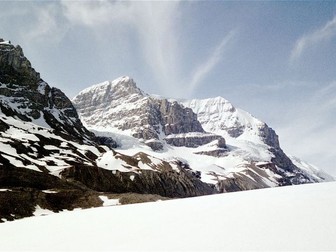
A collection of photos from my own visits to mountains around the world. I have used these photos with my class for projects and presentations about glaciation, mountain environment, habitats, adaptation, weather and climate, and plate tectonics.
Mountains Knowledge Organiser!Quick View
TandLGuru

Mountains Knowledge Organiser!

(0)
This clear, detailed and visually-appealing resource offers a complete reference point for students revising knowledge relating to mountains, as a part of their study of physical geography. It contains comprehensive sections on: Overview; Diagram and Terminology; Notable Mountains; How Mountains are Formed; Important Facts; World’s Highest Mountains; UK’s Highest Mountains; Key Vocabulary. The organiser is designed to help children to learn the relevant physical geography knowledge from the KS2 Geography National Curriculum, however it can be adapted for other age groups if necessary. The resource is designed to be printed onto A3 or A4, and is provided as both a PDF and a Word version (so that you can edit if you want to). All images used are licensed for commercial use and are cited on a separate document (included).
MountainsQuick View
Lolliepopcouture1

Mountains

(0)
This great powerpoint explains mountains and give lots of examples. Enjoy this resource but please do not re-upload. Copyrighted to @PrimaryPrints
Mountains - How mountains are formedQuick View
lisavicky

Mountains - How mountains are formed

(30)
An interactive activity that begins with a powerpoint and ends with groups of children working on creating their own mountain effects out of materials. Warning, need to prepare in advance for the activity. (Materials used for fold mountains are paper, tissue paper and thicker more scratchy type material to reflect differences in the earth's surface). Resources needed are crispy chocolate slabs, icing in plastic bag, sand, material, balloon and paper.
Story MountainQuick View
shhmakey

Story Mountain

(3)
Story Mountain activity sheet. Useful in english and literacy lessons.